

Plastic Shims & Gaskets
Gasket and shim materials, cut to your drawing.
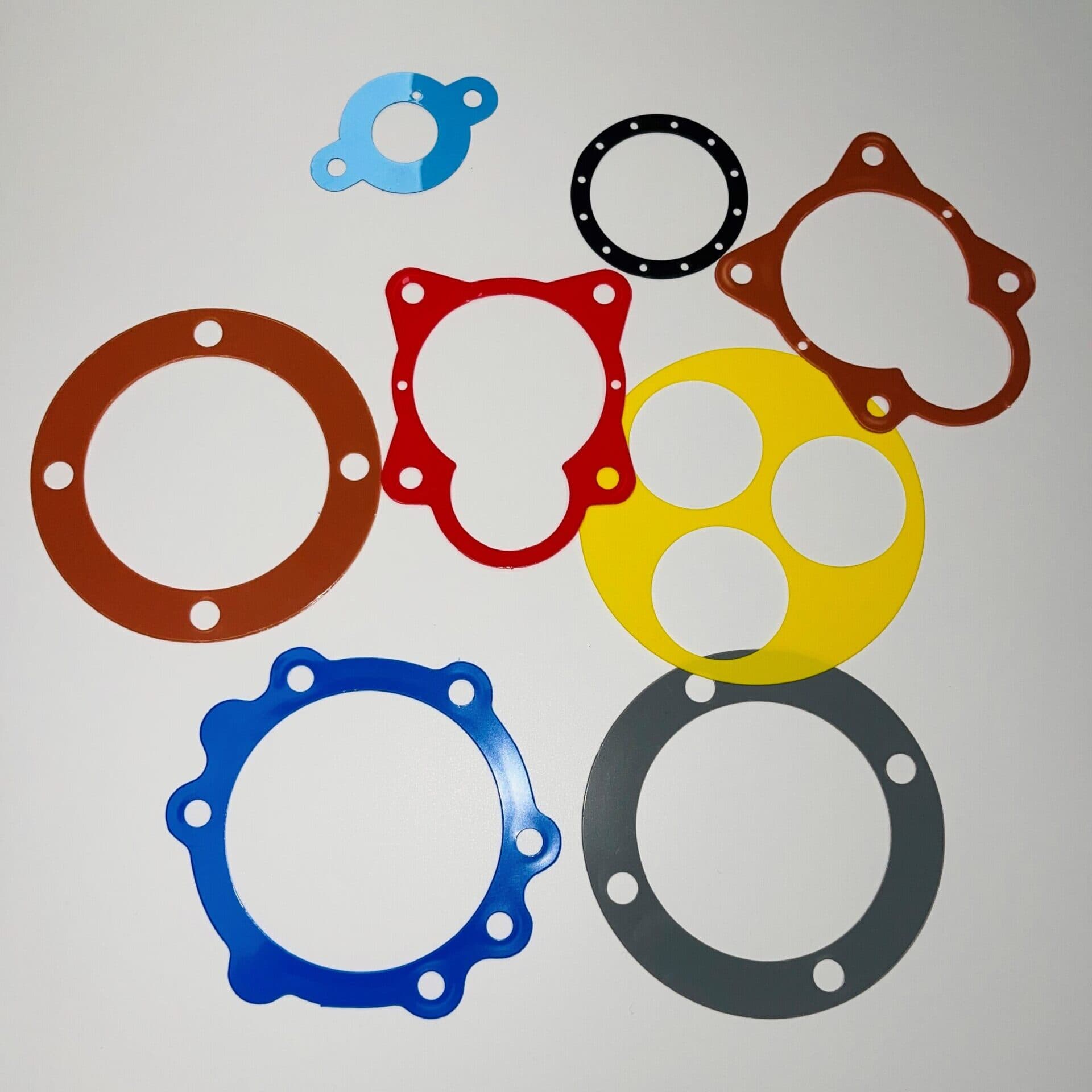
Gasket materials for every duty: rubber, PTFE, cork, fibre and foam gaskets; Nomex®, Kapton® and thermal interface parts; colour-coded Polymex® shims, plastic and metal shims, washers and spacers. Tell us what the part has to seal, insulate or space, and we will recommend the material and cut it to your drawing.
- Thicknesses we cut, from metal foil to thick PTFE
- 0.005 to 150 mm
- Shim materials
- 20+
- Colour-coded Polymex® thicknesses
- 12 to 3,000 µm

Plastic Shims & Gaskets
The gasket and shim materials behind every part we make.
Plastic Shims & Gaskets is PSG's division for precision-cut shims, gaskets, washers, spacers and insulators. If you have arrived from plasticshimsandgaskets.co.uk, you are in the right place: the colour-coded Polymex® materials and the cut parts are all here, as part of PSG Group International, and the Plastic Shims & Gaskets division page introduces the full product range.
This page is the materials library behind those products. A gasket only seals if its material survives the fluid, the temperature and the bolt load it meets. A shim only holds a gap if it does not creep, corrode or swell. Choosing the material is most of the job, and it is where our technical team spends most of its time with customers.
Below you will find every material family we cut, what each one is good at, where it stops being the right choice and the thicknesses we work with. Each family has its own guide with properties, grades and answers to common questions. When you are ready to order, our custom gaskets and custom shims pages explain how we quote.
The Plastic Shims & Gaskets divisionAt a glance
Gasket and shim materials at a glance.
The temperatures are typical for each material family. The exact limits depend on the grade, the compound and what the part touches, so the data sheet for the grade we supply always applies. The right-hand column shows the thicknesses we cut most often; others are available on request.
Polymex® is a trademark of PSG. Viton™ is a trademark of The Chemours Company. Klingersil® is a trademark of Klinger. Plastazote® is a trademark of Zotefoams. Nomex® is a trademark of Arclin or its affiliates. Kapton® is a registered trademark of its owner. Formex® is a registered trademark of ITW. Gap Pad® is a trademark of Henkel. Sil-Pad® is a trademark of Henkel. Other names are the trademarks of their owners.
Compare chemical resistance in the gasket material chartMaterials we cut
Typical service temperature and the thicknesses we cut
| Material | Typical service temperature | Thicknesses we cut |
|---|---|---|
| Rubber and elastomers | ||
| Neoprene (CR) | -40°C to +100°C | 1 to 25 mm solid; 1 to 5 mm foam |
| Nitrile (NBR) | -30°C to +100°C | 1 to 25 mm |
| EPDM | -50°C to +150°C | On request |
| Viton™ (FKM) | -20°C to +200°C | On request |
| Silicone | -60°C to +200°C | 1 to 10 mm (food grade) |
| PTFE, cork, fibre and foam | ||
| PTFE | -200°C to +260°C | 0.5 to 50 mm |
| Nitrile and neoprene bonded cork | -30°C to +120°C | 0.8 to 25 mm |
| Compressed fibre (Klingersil®) | Up to about 250°C to 400°C, by grade | 0.25 to 3 mm |
| Polyethylene, PVC, neoprene and Plastazote® foams | About -30°C to +80°C, by foam | 1 to 50 mm, by foam |
| Electrical insulation and thermal | ||
| Nomex® aramid paper | Up to 220°C (thermal class, by system) | 0.05 to 0.76 mm |
| Kapton® polyimide film | -269°C to +400°C short term; continuous use in systems rated 200°C and above | 0.023 to 0.125 mm |
| Formex® flame-retardant polypropylene | Set by the grade's UL thermal index | 0.127 to 1.57 mm |
| Gap Pad® and Sil-Pad® thermal pads | About -60°C to +200°C, by grade | 0.15 to 6.35 mm |
| Shims, plastics and metals | ||
| Polymex® A polyester | -70°C to +130°C (PSG data) | 0.012 to 0.350 mm |
| Polymex® B polypropylene | Softening point 144°C (PSG data) | 0.375 to 3.000 mm |
| Nylon, polycarbonate, rigid PVC and HIPS | About +60°C (PVC) to +120°C (polycarbonate) | 0.25 to 15 mm, by material |
| Brass, copper, aluminium, steel and stainless steel | Set by the alloy | 0.005 to 3 mm |
Rubber and elastomers
- Neoprene (CR)
- -40°C to +100°C
- Thicknesses we cut: 1 to 25 mm solid; 1 to 5 mm foam
- Nitrile (NBR)
- -30°C to +100°C
- Thicknesses we cut: 1 to 25 mm
- EPDM
- -50°C to +150°C
- Thicknesses we cut: On request
- Viton™ (FKM)
- -20°C to +200°C
- Thicknesses we cut: On request
- Silicone
- -60°C to +200°C
- Thicknesses we cut: 1 to 10 mm (food grade)
PTFE, cork, fibre and foam
- PTFE
- -200°C to +260°C
- Thicknesses we cut: 0.5 to 50 mm
- Nitrile and neoprene bonded cork
- -30°C to +120°C
- Thicknesses we cut: 0.8 to 25 mm
- Compressed fibre (Klingersil®)
- Up to about 250°C to 400°C, by grade
- Thicknesses we cut: 0.25 to 3 mm
- Polyethylene, PVC, neoprene and Plastazote® foams
- About -30°C to +80°C, by foam
- Thicknesses we cut: 1 to 50 mm, by foam
Electrical insulation and thermal
- Nomex® aramid paper
- Up to 220°C (thermal class, by system)
- Thicknesses we cut: 0.05 to 0.76 mm
- Kapton® polyimide film
- -269°C to +400°C short term; continuous use in systems rated 200°C and above
- Thicknesses we cut: 0.023 to 0.125 mm
- Formex® flame-retardant polypropylene
- Set by the grade's UL thermal index
- Thicknesses we cut: 0.127 to 1.57 mm
- Gap Pad® and Sil-Pad® thermal pads
- About -60°C to +200°C, by grade
- Thicknesses we cut: 0.15 to 6.35 mm
Shims, plastics and metals
- Polymex® A polyester
- -70°C to +130°C (PSG data)
- Thicknesses we cut: 0.012 to 0.350 mm
- Polymex® B polypropylene
- Softening point 144°C (PSG data)
- Thicknesses we cut: 0.375 to 3.000 mm
- Nylon, polycarbonate, rigid PVC and HIPS
- About +60°C (PVC) to +120°C (polycarbonate)
- Thicknesses we cut: 0.25 to 15 mm, by material
- Brass, copper, aluminium, steel and stainless steel
- Set by the alloy
- Thicknesses we cut: 0.005 to 3 mm
Typical values, not a specification. Elastomer temperatures are for static seals; oils, steam and chemicals can lower them.
Selection
Which gasket material suits your joint?
Choose what the joint has to cope with and the table narrows the field. It is a first filter, not a specification: compounds within a family differ, so ask us to check your choice against the fluid and the temperature.
What does the gasket meet?
Choose properties to find the right material. 8 materials compared.
| Requirement | Neoprene | Nitrile | EPDM | Viton™ (FKM) | Silicone | PTFE | Nitrile-bonded cork | Compressed fibre |
|---|---|---|---|---|---|---|---|---|
| Mineral oils and fuelsNeoprene and neoprene-bonded cork cope with some oils, but not fuels. | No | Yes | No | Yes | No | Yes | Yes | Yes |
| Outdoor weather, UV and ozone | Yes | No | Yes | Yes | Yes | Yes | No | No |
| Hot water and steamFibre: steam-rated grades only. | No | No | Yes | No | No | Yes | No | Yes |
| Continuous heat above 150°C | No | No | No | Yes | Yes | Yes | No | Yes |
| Cold below -40°C | No | No | Yes | No | Yes | Yes | No | No |
| Strong acids and solventsFKM is attacked by ketones and some esters. | No | No | No | Yes | No | Yes | No | No |
| Food-contact grades availableWe cut food-grade silicone; ask us about the others. | No | Yes | Yes | No | Yes | Yes | No | No |
| Uneven or lightly bolted flangesSoft materials seal at a low bolt load; neoprene-bonded cork does too. | Yes | No | No | No | Yes | No | Yes | No |
General guidance for each material family. The data sheet for the grade we supply applies.
Gasket and sealing materials
Rubber, PTFE, cork, fibre and foam gasket materials.
Ten guides to the materials that seal: what each one resists, the forms and thicknesses we cut, and when to choose something else.
- Read the guide
Gasket and sealing materials
Rubber gaskets
Every common elastomer compared, plus insertion, natural and butyl rubber.
- Read the guide
Gasket and sealing materials
Neoprene gaskets
Solid neoprene, neoprene foam and neoprene-bonded cork.
- Read the guide
Gasket and sealing materials
Nitrile gaskets
The standard rubber for oil, fuel and hydraulic fluid.
- Read the guide
Gasket and sealing materials
EPDM gaskets
Weather, water and steam resistant rubber seals.
- Read the guide
Gasket and sealing materials
Viton™ (FKM) gaskets
Fluoroelastomer seals for fuels, chemicals and heat.
- Read the guide
Gasket and sealing materials
Silicone gaskets
Solid, sponge and food-grade silicone for heat and cold.
- Read the guide
Gasket and sealing materials
PTFE gaskets
Chemically inert gaskets, washers and shims.
- Read the guide
Gasket and sealing materials
Cork gaskets
Nitrile and neoprene bonded cork for covers and housings.
- Read the guide
Gasket and sealing materials
Gasket paper and fibre
Compressed fibre, Klingersil® and fibre jointing.
- Read the guide
Gasket and sealing materials
Foam gaskets
Closed-cell foams and sponge for sealing and cushioning.
Electrical insulation and thermal
Electrical insulation and thermal interface materials.
Insulators have to stop current, survive heat and still fit the assembly. We die cut, crease and laminate insulating papers, films and sheet into parts that drop straight into motors, transformers, power supplies and electronics.
Insulation papers, films and sheet
Barriers, slot liners and insulators in Nomex®, Kapton®, Formex® and other insulating materials. Our guide to electrical insulation materials compares them by thermal class.
Nomex® paper and pressboard
Aramid insulation for motors, generators and transformers that run hot. See Nomex® insulation.
Kapton® polyimide film
Thin, tough film for the highest temperatures, cut into insulators, washers and shims. See Kapton® polyimide film.
Thermal interface pads
Gap Pad® gap fillers and Sil-Pad® insulators cut to the footprint of your component. See thermal interface materials.
Polyester (PET) insulation film
For polyester film, our polyester insulation film guide covers the grades and the Polymex® dielectric data.

Shims
Shim materials: Polymex®, plastics and metals.
Polymex® polyester and polypropylene shimstock is colour-coded: every thickness from 12 to 3,000 microns has its own colour, so the right shim is picked by sight instead of with a micrometer. It is stocked as Polymex® shimstock and cut into colour-coded plastic shims to your drawing.
Where a polymer is not stiff or heat resistant enough, we cut metal shims in brass, copper, aluminium, phosphor bronze, nickel, stainless steel and steel from 0.005 to 3 mm. Specialist shims come from Kapton®, PTFE, Klingersil® and the other materials on this page.
Our guide to the types of shims compares the materials and shapes, and the shim stack calculator works out which Polymex® shims make up a measured gap.
Each Polymex® colour identifies one thickness, so a stack can be checked at a glance.Custom shims cut to your drawing
Washers, spacers and plastics
Washers, spacers and engineering plastic parts.
The same materials that seal and insulate also make washers, spacers, wear pads and bearing plates, cut to your sizes in whatever quantity you need.
- Read the guide
Plastics and components
Engineering plastics
Nylon, acetal, polycarbonate and PVC parts to drawing.
- Read the guide
Plastics and components
Washers and spacers
Custom washers and spacers in any material.
- Custom plastic gaskets
Polymex®
Plastic gaskets and washers
Colour-coded polymer gaskets and washers, from simple rings to complex profiles.
Cutting methods
How we cut gaskets and shims.
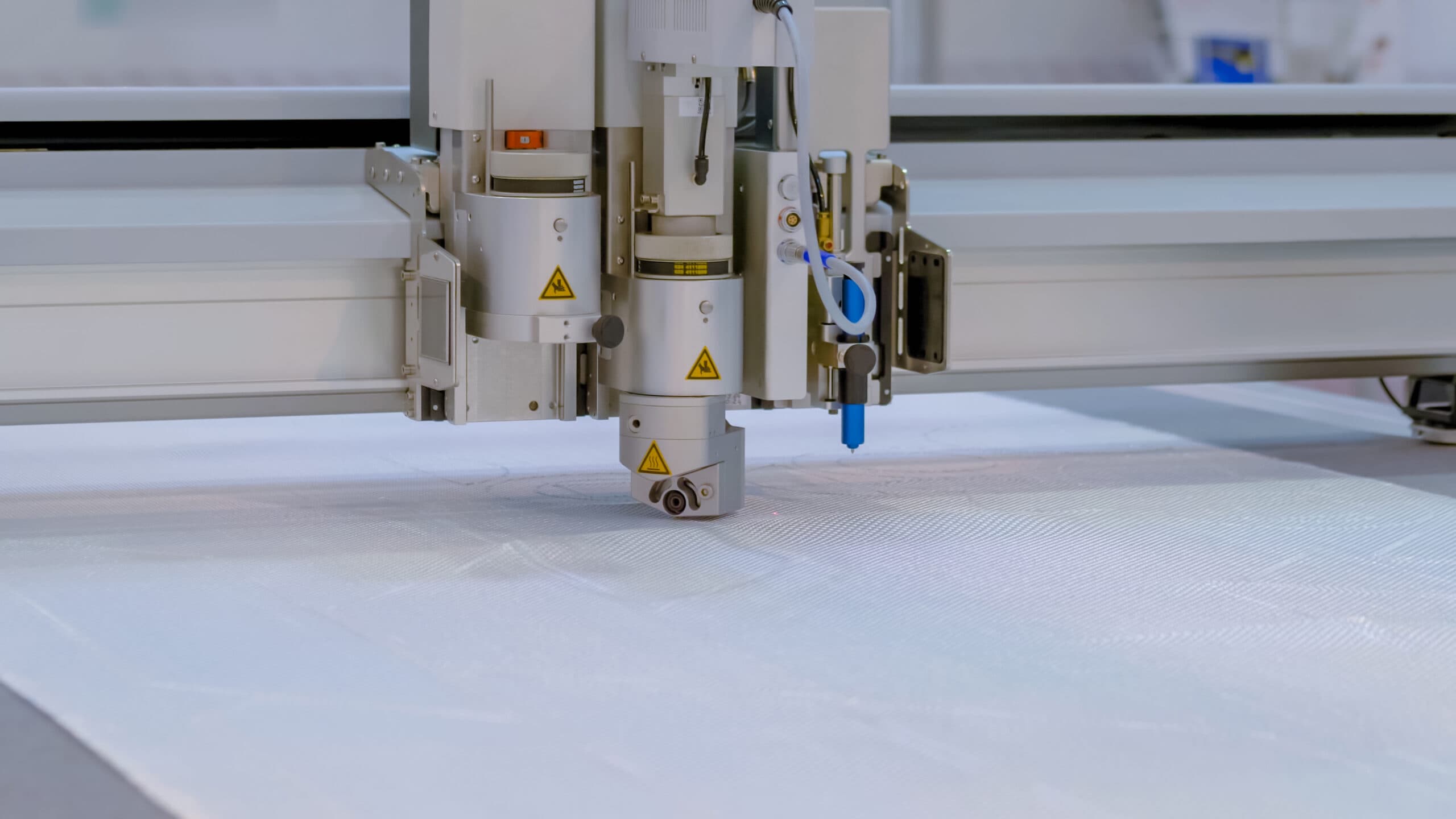
The cutting method follows the material, the shape, the tolerance and the quantity. We choose the one that gives you a reliable part at the right cost, and tell you why.
Die cutting
Flatbed and rotary presses for fast, repeatable production runs, from thin films to thick rubber. How die cutting works.
Kiss cutting and adhesive backing
Self-adhesive gaskets, pads and insulators are kiss cut through the material but not the liner, so they peel off ready to place.
Precision laser cutting
Fine detail and tight tolerances on complex profiles, with no cutting tool to make first. Laser and water jet cutting.
Water jet cutting
Clean cuts through thick rubber, foam and PTFE, with no heat to distort the edge.
Cut to your drawing
Send us your drawing with the material, thickness, tolerance and quantity, for a prototype or a production run.
Choosing a material
How to choose a gasket or shim material.
Five questions settle most material choices. If you cannot answer one of them, describe the application and our technical team will help you work it out.
- 01
How hot and how cold?
The highest and lowest temperature at the joint, and whether they are continuous or occasional. Temperature alone rules out many rubbers and foams.
- 02
What does it touch?
The fluid, gas or chemical on each side: oil, fuel, water, steam, acids, solvents or food. The gasket material chart rates each material against common media.
- 03
How much pressure and bolt load?
How hard the joint is clamped and what pressure it must hold. Soft materials seal at a low bolt load; compressed fibre and PTFE take high loads without being squeezed out.
- 04
What are the surfaces like?
Machined flanges, uneven castings or thin pressed covers, and whether the parts move, vibrate or are taken apart often. Rough or flexible surfaces need a more compressible material.
- 05
Which approvals apply?
Food contact, flame ratings, an electrical thermal class, RoHS, or a customer specification that names a grade. Tell us early, because approvals narrow the choice quickly.
Quality and supply
Quality, traceability and supply you can plan around.
Cut parts go into assemblies that have to pass inspection. Our quality system covers the material, the cutting and the paperwork.
BS EN ISO 9001
Our quality management system is approved to BS EN ISO 9001.
Traceable materials
We keep full traceability of the materials used in our components.
UK Gasket and Sealing Association
PSG is a member of the UK Gasket and Sealing Association (UKGSA).
Lead times and stock
Every order is made to order. When the material is in stock, we can often deliver within days.
Polymex® made in the UK
Polymex® shimstock is manufactured at Polymex House in Hinckley, Leicestershire.
Compliance documents on request
Ask for RoHS, REACH or food-contact declarations for the grade you choose, and we will tell you what its manufacturer provides.
Gasket and shim material FAQs
Gasket and shim material questions, answered.
Can't find what you need? Our technical team is happy to help.
What is the best gasket material?
There is no single best material: the right one depends on the temperature, the fluid, the pressure and the flanges. As a starting point, nitrile suits oils and fuels, EPDM suits water, steam and weather, silicone suits high and low temperatures, PTFE resists almost every chemical, and compressed fibre suits bolted flanges at higher temperatures and pressures. Our gasket material chart compares them, and our technical team will check your choice.
Which materials can you cut gaskets and shims from?
Rubbers such as neoprene, nitrile and silicone, PTFE, rubber-bonded cork, compressed fibre such as Klingersil®, foams, Nomex®, Kapton®, thermal interface pads, engineering plastics, colour-coded Polymex® and metals from 0.005 mm foil upwards. If your material is not listed, ask us: once your material is specified, we source it for your project.
What is the difference between a gasket, a shim and a washer?
A gasket seals the gap between two surfaces against a fluid or gas. A shim fills or adjusts a gap so that parts sit at the right height or alignment, and does not have to seal. A washer spreads the load of a fastener, insulates it or seals around it. The same materials can make all three, which is why we cut them side by side.
Do you make prototypes and small quantities?
Yes. Laser cutting needs no cutting tool, so prototypes and short runs are practical, and the same drawing can move to die cutting when volumes grow. Tell us your quantities when you ask for a quote.
What should I send with an enquiry?
The drawing you have, whether a CAD file or a dimensioned sketch, with the material, thickness, tolerance and quantity. If you do not know the material, describe what the part touches, the temperature and the pressure, and we will recommend one.
Are your materials RoHS and REACH compliant?
We can supply parts from RoHS-compliant materials on request. Ask for the declarations you need for your chosen grade and we will tell you what its manufacturer provides.
How quickly can you deliver?
Every order is made to order. When the material is in stock we can often deliver within days. Parts that need a new cutting tool, or a material we have to source, take longer, and we give you a delivery estimate with the quotation.
Is Plastic Shims and Gaskets still trading?
Yes. Plastic Shims & Gaskets is a division of PSG Group International, and the addresses of the old plasticshimsandgaskets.co.uk website now lead to the matching pages here. Colour-coded Polymex® materials and cut parts are available as before, and our Plastic Shims & Gaskets division page shows the full product range.
Guides and news
Shims and gaskets guides and news.
Send us your drawing
Get a quote for cut gaskets, shims and insulators.
- 01
Send your drawing
Upload a DXF, DWG, PDF or STEP file, or describe the part. Everything you send is handled in confidence.
- 02
Material advice
Our technical team helps you select the right material and thickness for the application.
- 03
Precision cut in-house
Die cutting, precision laser or water jet, chosen to hold your specified tolerances.
- 04
Delivered to your deadline
Manufactured in the UK and shipped worldwide.
Request a quote
Tell us what you need and a member of our technical team will be in touch.
Our customers