

PTFE gaskets
PTFE gaskets, washers and shims.
PTFE shrugs off almost every chemical, works from cryogenic cold to 260°C and has the lowest friction of any solid. We cut PTFE gaskets, washers, shims and spacers to your drawing, and help you choose the grade that will stay tight in your joint.
- PTFE thicknesses we cut, by grade
- 0.4 to 150 mm
- Typical service range of virgin PTFE
- -200°C to +260°C
Why PTFE
Why PTFE resists almost everything.
Polytetrafluoroethylene (PTFE) is a chain of carbon atoms completely sheathed in fluorine. The bond between carbon and fluorine is one of the strongest in chemistry, and the fluorine sheath leaves almost nothing for other substances to attack or cling to. That is why PTFE is unaffected by nearly all acids, alkalis, solvents and oils, why so little sticks to it, and why it slides more easily than any other solid.
For a gasket, that inertness means one material can seal a joint whatever passes through it. PTFE is the default choice on chemical plant, in pharmaceutical and food processing, and wherever the medium is aggressive or must not be contaminated. It absorbs almost no water, does not age in sunlight or ozone, and keeps its properties from cryogenic temperatures up to about 260°C.
PTFE is not a rubber, though. It is a firm, waxy plastic that does not spring back like an elastomer, and under a sustained bolt load it slowly flows. Choosing the right grade and thickness, covered below, is what turns those strengths into a joint that stays tight. Our gasket material chart compares PTFE with rubber, fibre and cork.
PTFE and other materials comparedProperties
PTFE properties for gasket and shim design.
These are typical values for unfilled (virgin) PTFE sheet, for comparing materials at the design stage. Filled and modified grades differ, and the data sheet for the grade we supply applies to your part.
Two figures matter most for a gasket. The service temperature range is wider than that of any rubber, and the thermal expansion is about ten times that of steel, which is why PTFE joints are best checked once they have been through their first heat cycle.
PTFE gaskets cut to your drawingVirgin PTFE: typical properties
General values, not a specification
| Property | Typical value |
|---|---|
| General | |
| Density | 2.14 to 2.20 g/cm³ |
| Water absorption (24 hours) | Below 0.01% |
| Flammability | UL 94 V-0; does not support combustion in air |
| Mechanical | |
| Tensile strength | 20 to 35 MPa |
| Elongation at break | 250% to 400% |
| Hardness | 50 to 65 Shore D |
| Coefficient of friction on steel | 0.05 to 0.10 |
| Thermal | |
| Service temperature | -200°C to +260°C |
| Melting point | About 327°C |
| Linear expansion (23°C to 100°C) | About 100 to 120 × 10⁻⁶ per °C |
| Thermal conductivity | About 0.25 W/m·K |
| Electrical | |
| Dielectric strength | About 20 kV/mm on 2 mm sheet; higher on thin film |
| Relative permittivity (1 MHz) | 2.1 |
| Volume resistivity | Above 10¹⁸ Ω·cm |
| Chemical | |
| Resistant to | Almost all acids, alkalis, solvents and oils |
| Attacked by | Molten alkali metals, fluorine gas and some fluorinating agents at high temperature |
General
- Density
- 2.14 to 2.20 g/cm³
- Water absorption (24 hours)
- Below 0.01%
- Flammability
- UL 94 V-0; does not support combustion in air
Mechanical
- Tensile strength
- 20 to 35 MPa
- Elongation at break
- 250% to 400%
- Hardness
- 50 to 65 Shore D
- Coefficient of friction on steel
- 0.05 to 0.10
Thermal
- Service temperature
- -200°C to +260°C
- Melting point
- About 327°C
- Linear expansion (23°C to 100°C)
- About 100 to 120 × 10⁻⁶ per °C
- Thermal conductivity
- About 0.25 W/m·K
Electrical
- Dielectric strength
- About 20 kV/mm on 2 mm sheet; higher on thin film
- Relative permittivity (1 MHz)
- 2.1
- Volume resistivity
- Above 10¹⁸ Ω·cm
Chemical
- Resistant to
- Almost all acids, alkalis, solvents and oils
- Attacked by
- Molten alkali metals, fluorine gas and some fluorinating agents at high temperature
Typical published values for unfilled PTFE. Ask for the data sheet of the grade we supply.
What we cut
PTFE gaskets, washers and shims we cut.
These are the PTFE materials we cut most often and the thicknesses they are available in. Tell us the size, tolerance and quantity, and the medium and temperature in service, and we will confirm the grade and the cutting method for your part.
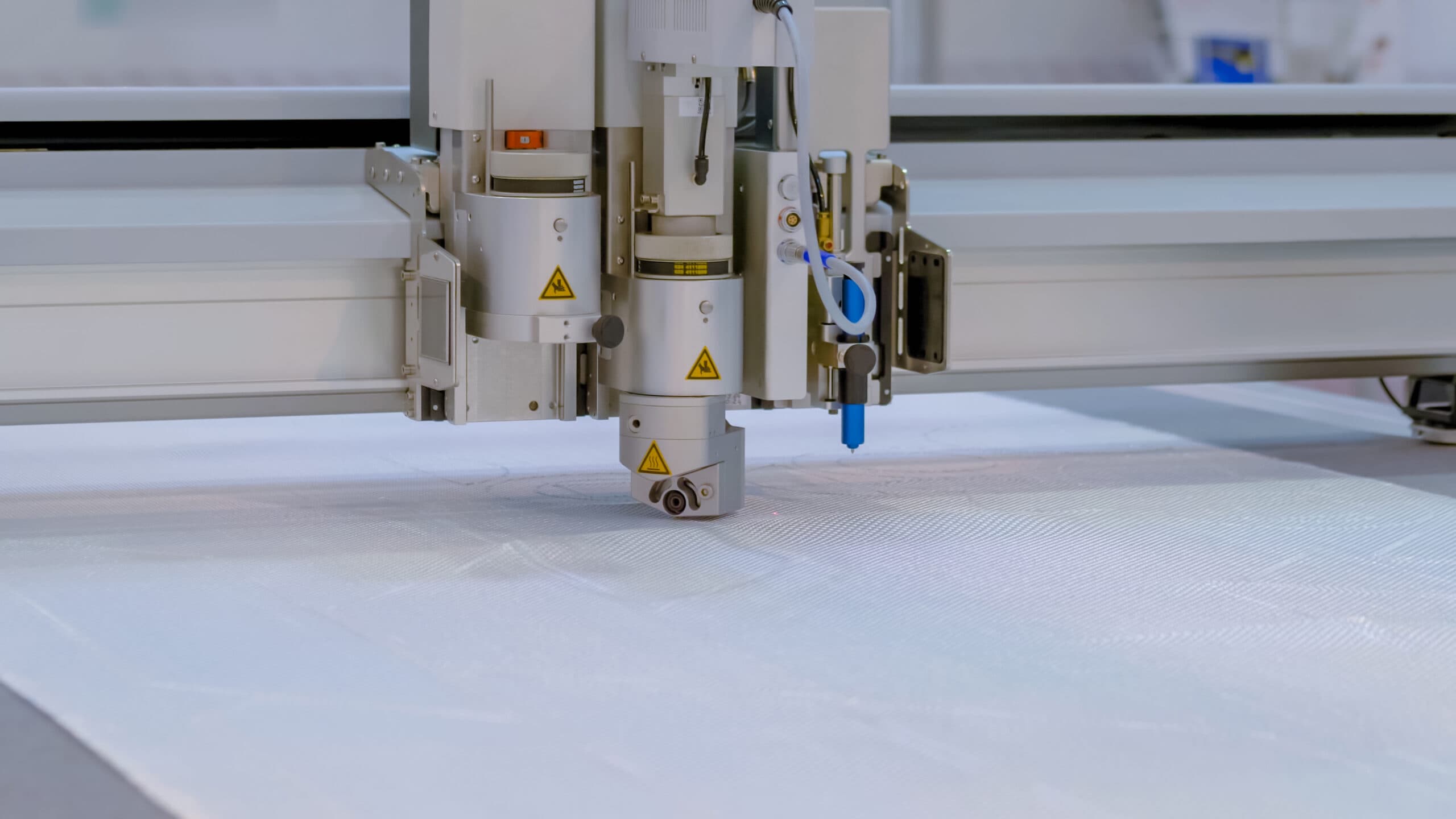
Thin sheet is usually die cut, and thick sheet is usually water jet cut, which leaves a clean edge with no heat. If you need a grade that is not listed, such as a particular filler, our sales team will be happy to help.
Teflon™ is a trademark of The Chemours Company. Gylon® is a trademark of Garlock. Other names are the trademarks of their owners.
Cut to your drawing
Rings, full-face gaskets, washers, shims and complex profiles.
Grade advice
We match the grade to the medium, the temperature and the bolt load.
PTFE from PSG
Materials and thicknesses
| Material | Available thicknesses |
|---|---|
| PTFE sheet | 0.500 to 50.000 mm |
| Teflon™ PTFE | 0.500 to 150.000 mm |
| Gylon® restructured PTFE | 0.400 to 6.400 mm |
| Parts | Gaskets, washers, shims, spacers and flat seals |
| Cutting | Die cut or water jet cut, by thickness |
- PTFE sheet
- 0.500 to 50.000 mm
- Teflon™ PTFE
- 0.500 to 150.000 mm
- Gylon® restructured PTFE
- 0.400 to 6.400 mm
- Parts
- Gaskets, washers, shims, spacers and flat seals
- Cutting
- Die cut or water jet cut, by thickness
Other grades and thicknesses on request.
Grades
Virgin, filled and modified PTFE compared.
Fillers and restructured sheet trade a little of PTFE's chemical resistance for less creep, better wear or higher thermal conductivity. Choose the properties your part needs to see which grades qualify.
What does the part need?
Choose properties to find the right material. 7 materials compared.
| Property | Virgin PTFE | Glass-filled | Carbon-filled | Graphite-filled | Bronze-filled | Restructured | Expanded PTFE |
|---|---|---|---|---|---|---|---|
| Widest chemical resistanceGlass is attacked by hydrofluoric acid and hot strong alkalis, bronze by many acids; restructured sheet depends on its filler. | Yes | No | No | No | No | No | Yes |
| Electrical insulationCarbon, graphite and bronze make PTFE conductive. | Yes | Yes | No | No | No | Yes | Yes |
| Less creep under bolt load | No | Yes | Yes | Yes | Yes | Yes | No |
| Low wear in moving partsGlass can wear soft mating metals. | No | Yes | Yes | Yes | Yes | No | No |
| Higher thermal conductivity | No | No | Yes | Yes | Yes | No | No |
| Food and pharmaceutical gradesCheck the declaration for the exact grade. | Yes | No | No | No | No | Yes | Yes |
| Seals uneven or damaged flangesSoft and very compressible. | No | No | No | No | No | No | Yes |
General guidance; properties vary with filler content and manufacturer. We confirm the grades available for your part with the quotation.

Design
Creep and cold flow: designing a PTFE gasket that stays tight.
Under a constant bolt load, virgin PTFE slowly flows outwards and the gasket thins. The bolts lose some of their tension and, if nothing is done, the joint can start to weep. This creep, often called cold flow, speeds up as the temperature rises, and it is the commonest reason a PTFE gasket fails.
There are four practical answers. Use a filled or restructured grade, which creeps far less than virgin PTFE. Keep the gasket as thin as the flanges allow, because a thin gasket has less material to flow. Support the PTFE, with a full-face gasket or a recess that confines it. And let the joint settle: on many joints the bolts are checked and retightened after the first heat cycle, following the equipment maker's procedure.
Tell us about the flanges, the bolting, the medium and the temperature cycle, and we will recommend a grade and thickness. For soft or damaged flanges, expanded PTFE conforms where solid sheet cannot.
A thin, well-supported PTFE gasket in the right grade is a gasket that stays tight.Talk to our technical team
Washers and shims
PTFE washers, shims and spacers.
Low friction, electrical insulation and chemical resistance make PTFE as useful between moving and fixed parts as it is in a flange.
Thrust and anti-friction washers
Low-friction washers that let parts turn against each other without lubrication, in a filled grade where they rotate continuously.
Insulating washers and spacers
Virgin PTFE isolates fasteners and components electrically and thermally, and will not corrode.
Shims in corrosive assemblies
PTFE shims set a gap where metal would corrode and other plastics would swell. Our custom shims page lists the other shim materials we cut.
Flat seals and slip rings
Flat seals, wipers and slip rings for pumps, valves and processing equipment.
Your sizes, your quantities
Our guide to custom washers and spacers explains how to specify sizes and tolerances.
Applications
Where PTFE gaskets are used.
PTFE earns its place wherever the medium is aggressive, the product must stay pure or the temperature rules out rubber.
- Industrial
Process
Chemical and process plant
Pipework, vessels, pumps and valves carrying acids, alkalis and solvents.
- Bioscience & Medical
Medical
Pharmaceutical and medical
Clean, inert seals and parts where nothing may leach into the product.
Food
Food and drink processing
Seals for processing equipment, in grades suited to food contact.
- Energy & Renewables
Energy
Energy and power
Gaskets and insulators that cope with heat, chemicals and electrical stress.
- Marine & Subsea
Marine
Marine and subsea
Seals, washers and shims that will not corrode in saltwater.
- Aerospace
Aerospace
Aircraft systems
Low-friction washers, insulators and seals for hydraulic and electrical systems.
PTFE gasket FAQs
PTFE gasket questions, answered.
Can't find what you need? Our technical team is happy to help.
Is PTFE the same as Teflon?
Teflon™ is a trade name for PTFE made by The Chemours Company. PTFE, polytetrafluoroethylene, is the material itself, and several manufacturers make it. A gasket specified as Teflon™ is a PTFE gasket; tell us if your drawing names a particular brand or grade.
What temperature can PTFE gaskets withstand?
Virgin PTFE is typically used from about -200°C to +260°C, and it melts at about 327°C. Towards the top of that range it creeps faster, so hot joints are usually better served by a filled or restructured grade. The data sheet for the grade we supply gives its rated limits.
Why do PTFE gaskets creep, and how is it prevented?
PTFE is a plastic rather than a rubber, so under a sustained load it slowly flows and the bolts lose tension. Filled and restructured grades, thinner gaskets, full-face or confined designs, and retightening after the first heat cycle all reduce it.
Should I choose filled or virgin PTFE?
Choose virgin PTFE for the widest chemical resistance, for electrical insulation and for food or pharmaceutical use. Choose a filled grade when creep, wear or heat transfer matter more: glass for creep resistance, carbon or graphite for wear and conductivity, bronze for strength and heat. Check the filler against the medium, because glass and bronze are attacked by some chemicals that virgin PTFE resists.
Is PTFE food safe?
Virgin PTFE is widely used in contact with food and pharmaceuticals, and many grades carry food-contact declarations. Ask us for the declaration that applies to the grade we supply before you order.
Can you cut PTFE washers and shims?
Yes. As well as gaskets, we cut PTFE washers, shims and spacers to your sizes, from thin sheet to thick plate. Send us the inside and outside diameters, the thickness, the tolerance and the quantity, or a drawing for anything more complex.
Have a PTFE gasket to specify?
Send us the drawing, the medium, the temperature and the bolting, and our technical team will recommend a grade and quote for the cut parts.
Gasket and shim materials
More materials and methods
Viton™ is a trademark of The Chemours Company. Klingersil® is a trademark of Klinger. Other names are the trademarks of their owners.
- Read more
Gasket and sealing materials
Rubber gaskets
Every common elastomer compared, plus insertion, natural and butyl rubber.
- Read more
Gasket and sealing materials
Neoprene gaskets
Solid neoprene, neoprene foam and neoprene-bonded cork.
- Read more
Gasket and sealing materials
Nitrile gaskets
The standard rubber for oil, fuel and hydraulic fluid.
- Read more
Gasket and sealing materials
EPDM gaskets
Weather, water and steam resistant rubber seals.
- Read more
Gasket and sealing materials
Viton™ (FKM) gaskets
Fluoroelastomer seals for fuels, chemicals and heat.
- Read more
Gasket and sealing materials
Silicone gaskets
Solid, sponge and food-grade silicone for heat and cold.
- Read more
Gasket and sealing materials
Cork gaskets
Nitrile and neoprene bonded cork for covers and housings.
- Read more
Gasket and sealing materials
Gasket paper and fibre
Compressed fibre, Klingersil® and fibre jointing.
- Read more
Gasket and sealing materials
Foam gaskets
Closed-cell foams and sponge for sealing and cushioning.
- Read more
Electrical insulation and thermal
Electrical insulation materials
Papers, films and sheet cut into insulators.
- Read more
Plastics and components
Engineering plastics
Nylon, acetal, polycarbonate and PVC parts to drawing.
- Read more
Cutting methods
Die cutting
Flatbed and rotary die cutting, prototype to volume.
Our customers