

Rubber gaskets
Rubber gaskets in every common elastomer.
Rubber seals by flowing into the joint and springing back when the load comes off, which makes it the first choice for covers, housings, enclosures and low-pressure flanges. We cut rubber gaskets and washers to your drawing, and help you choose the elastomer that suits the fluid, the temperature and the weather.
- Neoprene and nitrile rubber we cut
- 1 to 25 mm
- Typical span of the common elastomers
- -60°C to +200°C
Why rubber
Why rubber makes a good gasket.
An elastomer is a polymer whose long, cross-linked chains can be stretched or squeezed a long way and then return to their shape. Clamp a rubber gasket between two faces and it presses into every scratch and ripple, and it keeps pressing as the joint warms, cools and vibrates. That elastic recovery is what lets rubber seal at a modest bolt load, on cast or pressed covers that a hard gasket would never close. It also absorbs vibration and cuts cleanly into gaskets, washers and pads.
The limits matter as much. Solid rubber does not compress in volume: it changes shape, so it needs room to spread and support against high pressure. Each elastomer resists some fluids and is attacked by others, so the choice of elastomer comes first. Our gasket material chart compares rubber with PTFE, fibre and cork.
Rubber and other gasket materials comparedElastomers compared
Rubber gasket materials compared.
Temperature and hardness are the first two filters when choosing a rubber. The ranges here are typical for each elastomer family; compounds within a family differ, and the data sheet for the grade we supply applies to your part.
The next table shows which fluids each rubber copes with.
Viton™ is a trademark of The Chemours Company. Other names are the trademarks of their owners.
Rubber gaskets cut to your drawingCommon gasket rubbers: typical ranges
General values, not a specification
| Elastomer | Typical service temperature | Typical hardness |
|---|---|---|
| Synthetic rubbers | ||
| Neoprene (CR) | -40°C to +100°C | 40 to 80 Shore A |
| Nitrile (NBR) | -30°C to +100°C | 50 to 90 Shore A |
| EPDM | -50°C to +150°C | 40 to 90 Shore A |
| Viton™ (FKM) | -20°C to +200°C | 60 to 90 Shore A |
| Silicone (VMQ) | -60°C to +200°C | 20 to 80 Shore A |
| Other rubbers | ||
| Natural rubber (NR) | -50°C to +70°C | 30 to 90 Shore A |
| Butyl (IIR) | -40°C to +120°C | 40 to 80 Shore A |
| Insertion rubber | Set by the base rubber | Set by the base rubber |
Synthetic rubbers
- Neoprene (CR)
- -40°C to +100°C
- Typical hardness: 40 to 80 Shore A
- Nitrile (NBR)
- -30°C to +100°C
- Typical hardness: 50 to 90 Shore A
- EPDM
- -50°C to +150°C
- Typical hardness: 40 to 90 Shore A
- Viton™ (FKM)
- -20°C to +200°C
- Typical hardness: 60 to 90 Shore A
- Silicone (VMQ)
- -60°C to +200°C
- Typical hardness: 20 to 80 Shore A
Other rubbers
- Natural rubber (NR)
- -50°C to +70°C
- Typical hardness: 30 to 90 Shore A
- Butyl (IIR)
- -40°C to +120°C
- Typical hardness: 40 to 80 Shore A
- Insertion rubber
- Set by the base rubber
- Typical hardness: Set by the base rubber
Typical published ranges. Short-term peaks can be higher; ask for the data sheet of the grade we supply.
Resistance
Oil, weather, water and heat resistance by rubber.
Choose what the gasket has to cope with to see which elastomers qualify. It is a first filter: check the exact fluid and temperature with us.
What does the gasket meet?
Choose properties to find the right material. 7 materials compared.
| Requirement | Neoprene | Nitrile | EPDM | Viton™ (FKM) | Silicone | Natural rubber | Butyl |
|---|---|---|---|---|---|---|---|
| Mineral oils and greasesNeoprene has moderate resistance to some mineral oils. | No | Yes | No | Yes | No | No | No |
| Petrol, diesel and fuelsHigh-acrylonitrile nitrile for fuels; FKM for blends and aromatics. | No | Yes | No | Yes | No | No | No |
| Outdoor weather, UV and ozone | Yes | No | Yes | Yes | Yes | No | Yes |
| Hot water and steamEPDM: peroxide-cured grades for steam. | No | No | Yes | No | No | No | Yes |
| Continuous heat above 120°CEPDM to about 150°C in peroxide-cured grades. | No | No | Yes | Yes | Yes | No | No |
| Cold below -40°C | No | No | Yes | No | Yes | Yes | No |
| Flame resistanceFlame-rated silicone grades also exist. | Yes | No | No | Yes | No | No | No |
| Tear and abrasion resistanceSilicone has the lowest tear strength. | Yes | Yes | No | No | No | Yes | No |
| Food-contact grades existWe cut food-grade silicone; ask us about the others. | No | Yes | Yes | No | Yes | Yes | No |
General guidance for each elastomer family; compounds vary. We confirm the grade for your part with the quotation.
The main elastomers
Neoprene, nitrile, EPDM, Viton™ and silicone.
Five synthetic rubbers cover most gasket duties; each has its own page.
Neoprene: the all-rounder
Weather and ozone resistant, moderately oil resistant and flame retardant. Read our guide to neoprene gaskets, solid and sponge.
Nitrile: for oil and fuel
The standard rubber for oils, fuels and hydraulic fluid, but poor in sunlight. See nitrile gaskets for oil and fuel.
EPDM: for weather, water and steam
EPDM is outstanding outdoors and in hot water and steam, but swells in oil.
Viton™ (FKM): for fuels, chemicals and heat
FKM fluoroelastomer resists fuels, aromatics and many acids to about 200°C, at a higher price.
Silicone: for heat, cold and food
The widest temperature range, with food-grade compounds, but low tear strength. See silicone gaskets for heat and food contact.
Other rubbers
Natural, butyl and insertion rubber.
Natural rubber (NR) has the highest resilience and tear resistance of the common rubbers. It suits pads, washers, diaphragms and water seals at moderate temperatures, but it is attacked by oils and degrades in sunlight and ozone.
Butyl rubber (IIR) is the most gas-tight of the common elastomers, which is why it lines tyres and seals pharmaceutical vials. It resists weather, ozone, many acids and hot water, damps vibration well, and is not for oils.
Insertion rubber is rubber sheet with one or more plies of fabric built in. The cloth adds tear strength and stops the rubber spreading under bolt load, in pipe flanges, manway covers and diaphragms. Its fluid resistance is that of its base rubber: natural for water, nitrile for oils. Ask us about natural, butyl or insertion rubber for your part.
Talk to our technical teamDesign
Hardness, thickness and compression set in rubber gaskets.
Hardness is measured on the Shore A scale. Softer rubber seals at a lower bolt load and fills rough faces, but extrudes more easily under pressure. Harder rubber resists extrusion, and needs flatter flanges and more bolt load. For most flat gaskets, 60 to 70 Shore A is a sound starting point.
Use the thinnest gasket that takes up the unevenness of the faces: a thick gasket relaxes more and is easier to blow out.
Compression set is the share of a squeeze that a rubber keeps after the load is removed: a low figure means the gasket keeps pushing back. It rises with heat and time, so a hot joint needs a rubber with good set resistance at its working temperature.
Choosing hardness and thickness
Typical starting points, not a specification
| Choice | Typical use |
|---|---|
| Hardness | |
| 40 to 50 Shore A | Soft: rough or lightly bolted covers; needs support against extrusion |
| 55 to 65 Shore A | General purpose: covers, housings and low-pressure flanges |
| 70 to 75 Shore A | Firm: higher bolt loads and pressures, washers and pads |
| 80 to 90 Shore A | Hard: spacers and bearing pads on flat, rigid faces |
| Thickness | |
| 1 to 1.5 mm | Smooth, flat, rigid faces with good bolting |
| 2 to 3 mm | General purpose covers and pipe flanges |
| 4 mm and over | Distorted or uneven faces, wide gaps, lightly bolted panels |
Hardness
- 40 to 50 Shore A
- Soft: rough or lightly bolted covers; needs support against extrusion
- 55 to 65 Shore A
- General purpose: covers, housings and low-pressure flanges
- 70 to 75 Shore A
- Firm: higher bolt loads and pressures, washers and pads
- 80 to 90 Shore A
- Hard: spacers and bearing pads on flat, rigid faces
Thickness
- 1 to 1.5 mm
- Smooth, flat, rigid faces with good bolting
- 2 to 3 mm
- General purpose covers and pipe flanges
- 4 mm and over
- Distorted or uneven faces, wide gaps, lightly bolted panels
General guidance. The equipment maker's specification or the flange standard takes precedence.
Solid or sponge
Solid rubber or sponge for your gasket?
Solid rubber is effectively incompressible: squeezed, it bulges sideways. It suits bolted joints that hold pressure: flanges, pumps, housings and washers.
Sponge rubber is full of tiny closed cells, so it compresses in volume and seals at a very light load. It suits doors, lids, panels and enclosures that keep out dust, splash and draughts. Closed-cell sponge typically runs at about 25% to 50% compression. It does not hold pressure, and open-cell foam does not keep out water.
Neoprene, EPDM and silicone are all made as closed-cell sponge. Our guide to foam and sponge gaskets covers the sponges and foams we cut.
Solid rubber holds pressure; sponge closes gaps at a light touch.Foam gaskets
What we cut
Cutting rubber gaskets: die cut, water jet and self-adhesive.
These are the rubbers we cut most often and the thicknesses they are available in. Tell us the size, tolerance, quantity, fluid and temperature, and we will confirm the grade and cutting method.
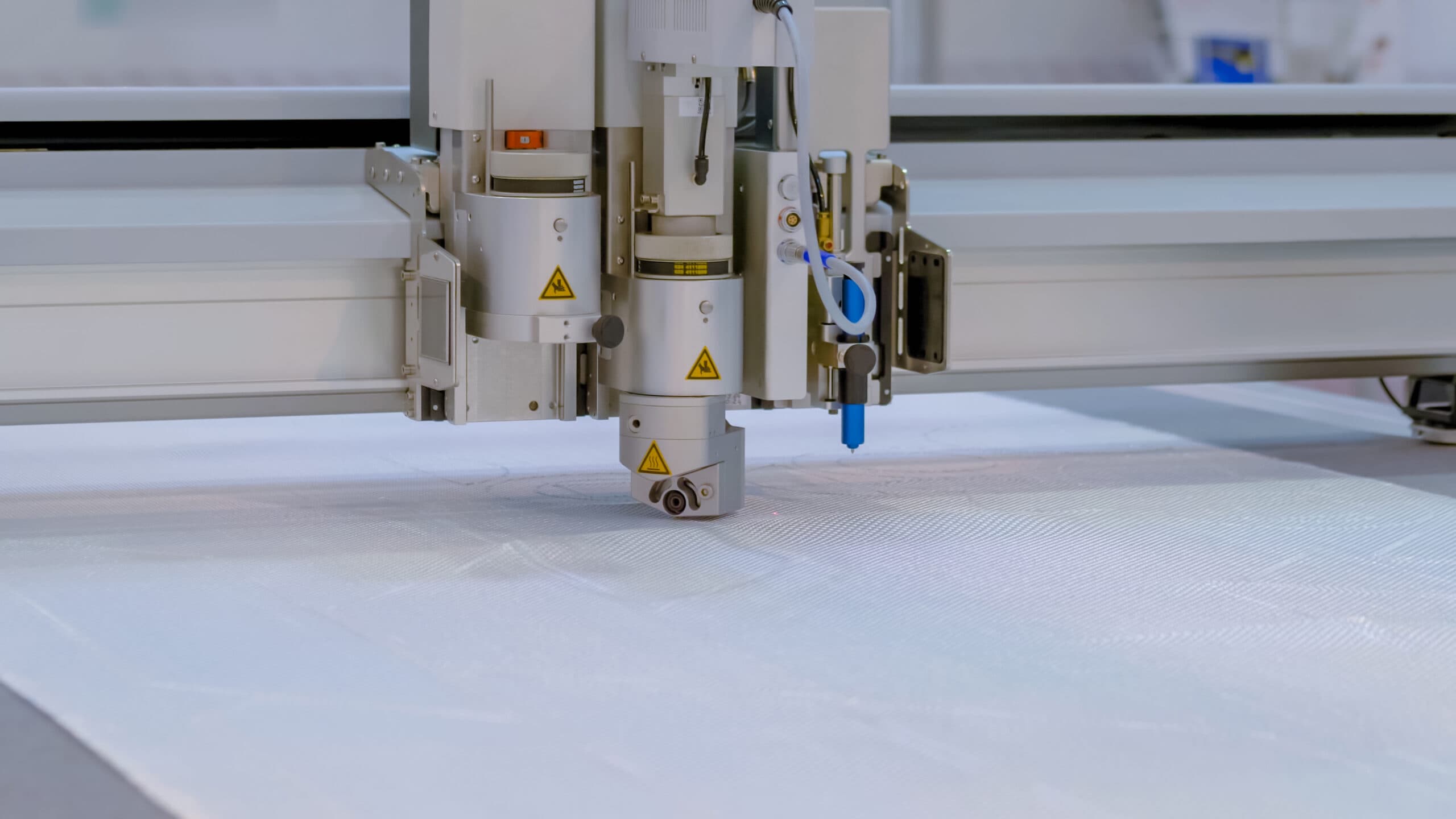
For repeat production, die cutting with a steel rule tool gives fast, consistent parts at a low unit cost. Thick sheet and prototypes are usually water jet cut, which needs no tool and leaves a clean edge with no heat. Rubber gaskets can also be supplied with a pressure-sensitive adhesive backing, so they stay in place during assembly.
Cut to your drawing
Full-face and ring gaskets, washers, pads, strips and complex profiles.
Rubber from PSG
Materials and thicknesses
| Material | Available thicknesses |
|---|---|
| Neoprene rubber | 1.000 to 25.000 mm |
| Nitrile rubber | 1.000 to 25.000 mm |
| Food grade silicone rubber | 1.000 to 10.000 mm |
| Neoprene foam | 1.000 to 5.000 mm |
| EPDM, FKM, natural, butyl and insertion rubber | On request |
| Cutting | Die cut or water jet cut, by thickness and quantity |
| Adhesive backing | On request |
- Neoprene rubber
- 1.000 to 25.000 mm
- Nitrile rubber
- 1.000 to 25.000 mm
- Food grade silicone rubber
- 1.000 to 10.000 mm
- Neoprene foam
- 1.000 to 5.000 mm
- EPDM, FKM, natural, butyl and insertion rubber
- On request
- Cutting
- Die cut or water jet cut, by thickness and quantity
- Adhesive backing
- On request
Other rubbers, hardnesses and thicknesses on request.
Rubber gasket FAQs
Rubber gasket questions, answered.
Can't find what you need? Our technical team is happy to help.
Which rubber is best for gaskets?
It depends on what the gasket meets. Nitrile suits oils and fuels, EPDM suits weather, water and steam, silicone suits extreme heat, cold and food contact, neoprene is a good all-rounder, and FKM handles fuels and chemicals at high temperature. Tell us the fluid and temperature, and we will recommend one.
What is the difference between neoprene and nitrile rubber?
Nitrile resists mineral oils, fuels and hydraulic fluids far better than neoprene, but it ages quickly in sunlight and ozone. Neoprene resists weather, ozone and flame, and copes with some oils. As a rule, use nitrile inside oily machinery and neoprene outdoors or where oil contact is light.
Which rubber gaskets are oil resistant?
Nitrile is the standard oil-resistant rubber, and FKM fluoroelastomer resists oils and fuels at higher temperatures and in aromatic blends. Neoprene has moderate resistance to some mineral oils. EPDM, natural rubber and butyl swell badly in oil and should be kept away from it.
Which rubber is best for outdoor seals?
EPDM is the usual choice outdoors: it resists UV, ozone, rain and temperature swings for many years. Neoprene and silicone also weather well, and silicone stays flexible in severe cold. Nitrile and natural rubber crack in sunlight and ozone unless protected.
What Shore hardness should a rubber gasket be?
For most flat gaskets, 60 to 70 Shore A is a good starting point. Choose 40 to 50 Shore A for rough or lightly bolted covers, 70 to 75 Shore A for higher bolt loads, washers and pads, and 80 to 90 Shore A for spacers and bearing pads on flat, rigid faces. The table above gives typical uses.
What thickness of rubber gasket do I need?
Use the thinnest gasket that will take up the unevenness of the faces. Smooth, rigid flanges seal with 1 to 1.5 mm, general covers and pipe flanges usually take 2 to 3 mm, and distorted or lightly bolted panels may need 4 mm or more, or sponge.
Can rubber gaskets be self-adhesive?
Yes. Rubber and sponge gaskets can be supplied with a pressure-sensitive adhesive on one face, which holds them in place during assembly and saves fasteners. Tell us the surface it will stick to and the temperature in service, and we will suggest a suitable adhesive.
Have a rubber gasket to specify?
Send us the drawing, the fluid, the temperature and the bolting, and our technical team will recommend an elastomer and quote for the cut parts.
Gasket and shim materials
More materials and methods
Viton™ is a trademark of The Chemours Company. Klingersil® is a trademark of Klinger. Other names are the trademarks of their owners.
- Read more
Gasket and sealing materials
Neoprene gaskets
Solid neoprene, neoprene foam and neoprene-bonded cork.
- Read more
Gasket and sealing materials
Nitrile gaskets
The standard rubber for oil, fuel and hydraulic fluid.
- Read more
Gasket and sealing materials
EPDM gaskets
Weather, water and steam resistant rubber seals.
- Read more
Gasket and sealing materials
Viton™ (FKM) gaskets
Fluoroelastomer seals for fuels, chemicals and heat.
- Read more
Gasket and sealing materials
Silicone gaskets
Solid, sponge and food-grade silicone for heat and cold.
- Read more
Gasket and sealing materials
PTFE gaskets
Chemically inert gaskets, washers and shims.
- Read more
Gasket and sealing materials
Cork gaskets
Nitrile and neoprene bonded cork for covers and housings.
- Read more
Gasket and sealing materials
Gasket paper and fibre
Compressed fibre, Klingersil® and fibre jointing.
- Read more
Gasket and sealing materials
Foam gaskets
Closed-cell foams and sponge for sealing and cushioning.
- Read more
Electrical insulation and thermal
Electrical insulation materials
Papers, films and sheet cut into insulators.
- Read more
Plastics and components
Engineering plastics
Nylon, acetal, polycarbonate and PVC parts to drawing.
- Read more
Cutting methods
Die cutting
Flatbed and rotary die cutting, prototype to volume.
Our customers