

Silicone gaskets
Silicone gaskets for heat, cold and food contact.
Silicone stays soft and elastic from deep cold to oven heat, resists weather and ozone, and is clean enough for food contact. We cut silicone gaskets, washers and seals to your drawing in food-grade silicone rubber, and in sponge for low-load seals.
- Food-grade silicone rubber we cut
- 1 to 10 mm
- Typical service range of silicone
- -60°C to +200°C
Why silicone
Why silicone keeps sealing when other rubbers harden.
Silicone rubber is built on a backbone of silicon and oxygen, the same bond found in glass and quartz, rather than the carbon chain of other rubbers. That backbone is far more stable in heat and far more flexible in cold. Where nitrile and neoprene harden and crack above about 100°C, silicone keeps its elasticity to about 200°C, and it stays soft at -60°C, when most rubbers are stiff.
It also shrugs off ozone, ultraviolet light and weathering, is odourless and tasteless, and is a good electrical insulator. Food-grade compounds make it the usual gasket rubber for ovens, food processing and drinks equipment.
Silicone's weaknesses are mechanical and chemical: it tears and abrades easily, swells in fuels and many oils, and degrades in high-pressure steam. Our guide to rubber gasket materials shows how it compares with the other elastomers.
All rubber gasket materialsProperties
Silicone rubber properties for gasket design.
These are typical values for solid silicone rubber sheet, for comparing materials at the design stage. The data sheet for the grade we supply applies to your part.
Notice the contrast: silicone's temperature range and electrical properties are the best of the common rubbers, but its tensile and tear strength are among the lowest. Design silicone gaskets to be clamped, not stretched, scraped or slid.
Silicone gaskets cut to your drawingSolid silicone rubber: typical properties
General values, not a specification
| Property | Typical value |
|---|---|
| General | |
| Polymer | Silicone rubber (VMQ) |
| Density | 1.1 to 1.5 g/cm³, by compound |
| Mechanical | |
| Hardness | 20 to 80 Shore A; 50 to 70 Shore A is common |
| Tensile strength | 5 to 10 MPa |
| Elongation at break | 200% to 600% |
| Tear and abrasion resistance | Low compared with other rubbers |
| Compression set | Low over a wide temperature range |
| Thermal | |
| Service temperature | -60°C to +200°C |
| Short-term peak | About +250°C in heat-stabilised grades |
| Thermal conductivity | About 0.2 W/m·K |
| Electrical | |
| Dielectric strength | About 18 to 25 kV/mm |
| Resistance | |
| Ozone, UV and weather | Excellent |
| Attacked by | Fuels, many mineral oils, concentrated acids and alkalis, steam above about 120°C |
General
- Polymer
- Silicone rubber (VMQ)
- Density
- 1.1 to 1.5 g/cm³, by compound
Mechanical
- Hardness
- 20 to 80 Shore A; 50 to 70 Shore A is common
- Tensile strength
- 5 to 10 MPa
- Elongation at break
- 200% to 600%
- Tear and abrasion resistance
- Low compared with other rubbers
- Compression set
- Low over a wide temperature range
Thermal
- Service temperature
- -60°C to +200°C
- Short-term peak
- About +250°C in heat-stabilised grades
- Thermal conductivity
- About 0.2 W/m·K
Electrical
- Dielectric strength
- About 18 to 25 kV/mm
Resistance
- Ozone, UV and weather
- Excellent
- Attacked by
- Fuels, many mineral oils, concentrated acids and alkalis, steam above about 120°C
Typical published values for solid silicone. Ask for the data sheet of the grade we supply.
What we cut
Solid, sponge and foam silicone gaskets.
Solid silicone rubber is for gaskets and washers that hold pressure or need a firm, durable seal. Silicone sponge is closed-cell: it compresses in volume and seals oven doors, lighting housings and enclosures at a light closing force. Silicone foam is softer still, for cushioning and gap filling. Our guide to foam and sponge gaskets compares silicone sponge with other foams.
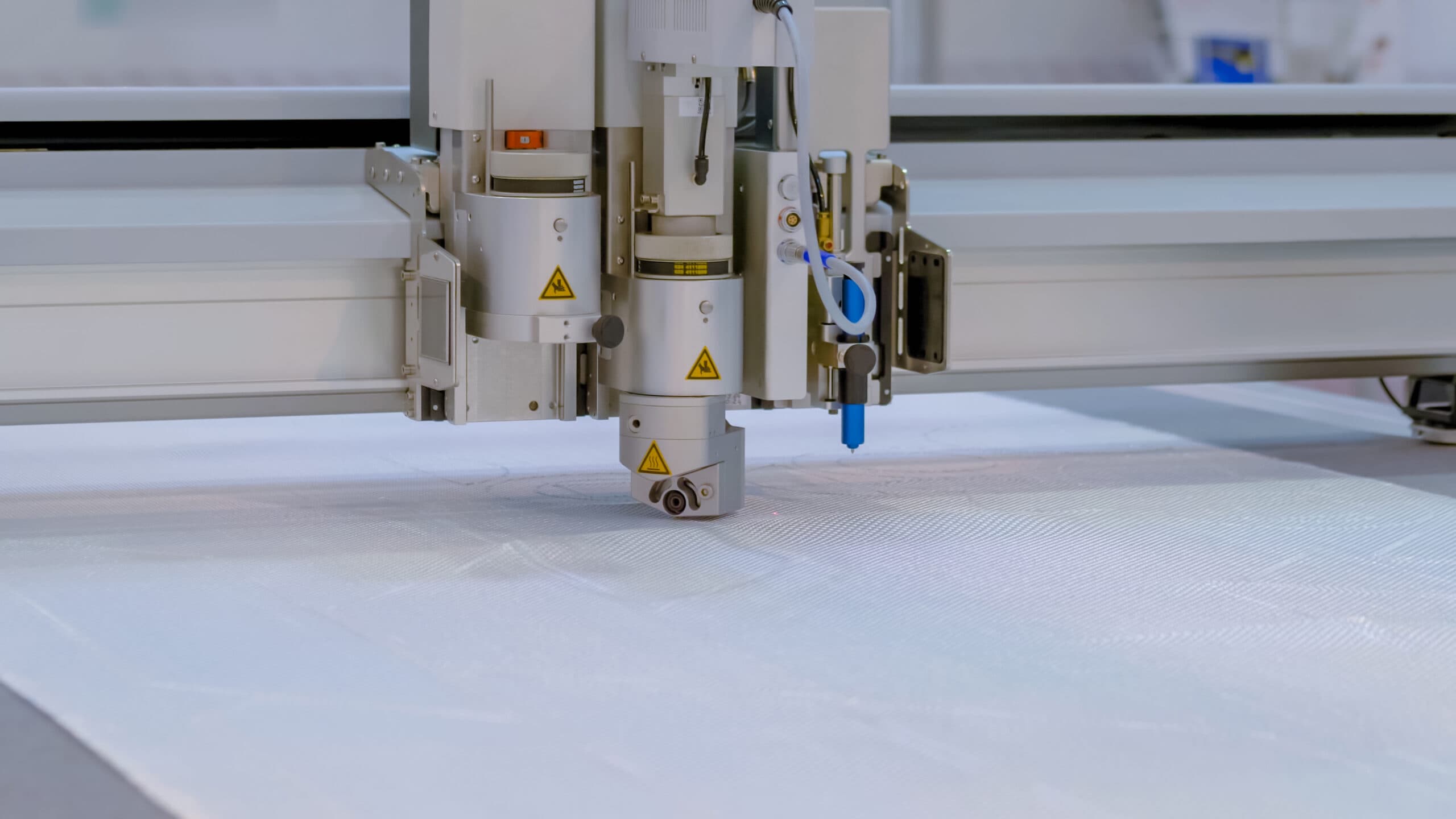
Silicone gaskets are punched with a cutting tool for production runs, or cut without a tool for prototypes and thick sheet; see water jet and laser cutting. Sponge can be supplied with an adhesive backing, and as kiss-cut parts on a liner.
Cut to your drawing
Gaskets, washers, seals, strips and complex profiles.
Grade advice
Solid or sponge, food grade or general, matched to the service.
Silicone from PSG
Materials and thicknesses
| Material | Available thicknesses |
|---|---|
| Food grade silicone rubber | 1.000 to 10.000 mm |
| General-purpose solid silicone | On request |
| Silicone sponge (closed cell) | On request |
| Silicone foam | On request |
| Adhesive backing | On request |
| Cutting | Punched with a cutting tool or water jet cut |
- Food grade silicone rubber
- 1.000 to 10.000 mm
- General-purpose solid silicone
- On request
- Silicone sponge (closed cell)
- On request
- Silicone foam
- On request
- Adhesive backing
- On request
- Cutting
- Punched with a cutting tool or water jet cut
Other grades, colours and thicknesses on request.
Food contact
Food-grade silicone gaskets.
Food-grade silicone is compounded from ingredients approved for contact with food, and is typically made to meet FDA 21 CFR 177.2600 in the United States and the framework regulation (EC) No 1935/2004 for food-contact materials. It is odourless, does not taint food or drink, and withstands repeated hot washing and cleaning.
For a food-contact part, the material grade is only half of the story: you also need the declaration of compliance that applies to it. Ask us for the declaration for the grade we supply, and tell us the food type, the temperature and the contact time so we can check it.
Food processors often specify a colour, such as white, red or a metal-detectable blue, so that a lost fragment can be found. Ask us about the colours available for your part.
Talk to our technical teamApplications
Where silicone gaskets are used.
Silicone is chosen when the temperature rules out other rubbers, when the seal touches food or skin, or when it must last outdoors.
Food
Ovens and food processing
Door seals, lid gaskets and equipment seals in food-grade silicone.
- Packaging Films
Packaging
Packaging machinery
Heat-resistant seals and pads for sealing jaws and filling lines.
- Bioscience & Medical
Medical
Medical and laboratory equipment
Clean, inert gaskets, seals and diaphragms for devices and instruments.
Lighting
Lighting
Lamp and luminaire gaskets that stay soft in the heat of the lamp.
Electronics
Electronics enclosures
Dust and splash seals for housings, panels and connectors.
- Aerospace
Aerospace
Aircraft interiors and systems
Seals and pads for hot ducts, cabin equipment and electronics.
Limits
Limits of silicone: tear, abrasion, fuels and steam.
Silicone is a superb static seal, but there are four places it should not go.
Tearing and abrasion
Silicone tears easily once nicked and wears quickly against moving parts. Use it for static seals, avoid sharp edges, and do not use it where the gasket slides or scrapes.
Fuels and oils
Fuels and many mineral oils swell silicone. For oil and fuel, use nitrile, or a fluoroelastomer when it is also hot.
High-pressure steam
Steam above about 120°C slowly breaks down the silicone backbone. For steam, peroxide-cured EPDM or PTFE is usually better.
Concentrated acids and alkalis
Strong acids and alkalis attack silicone. Check any cleaning chemicals too, especially in food plants.
Gas permeability
Silicone lets gases through more readily than other rubbers, so it is a poor choice for vacuum or gas-tight seals.
O-rings and mouldings
Silicone O-rings and moulded silicone parts.
Not every silicone seal can be cut from sheet. A round-section O-ring, a seal with a lip or a bead, or a three-dimensional part has to be moulded or extruded instead.
If your part needs silicone O-rings or a moulded silicone seal alongside the flat gaskets we cut, tell us what you need. We will tell you what we can supply and how, and quote the moulded and cut parts together so that one order covers the assembly.
For most flat seals, though, a cut gasket is quicker and cheaper than a moulding, because it needs at most a simple cutting tool rather than a mould.
A flat gasket cut from sheet is usually quicker and cheaper than a moulding.Ask about silicone parts
Silicone gasket FAQs
Silicone gasket questions, answered.
Can't find what you need? Our technical team is happy to help.
Are silicone gaskets food safe?
Food-grade silicone is. It is made from ingredients approved for food contact, typically to FDA 21 CFR 177.2600 and Regulation (EC) No 1935/2004, and is odourless and taint-free. General-purpose silicone is not automatically food safe, so ask us for the declaration that applies to the grade before you order.
What temperature can silicone gaskets withstand?
Silicone is typically used from about -60°C to +200°C continuously, with heat-stabilised grades taking short peaks to about +250°C. It stays flexible at low temperatures, where most rubbers stiffen. The data sheet for the grade we supply gives its rated limits.
Solid or sponge silicone?
Choose solid silicone for gaskets and washers that are bolted up or must hold pressure. Choose closed-cell silicone sponge for doors, lids and enclosures that close with a light force, or where the gap is uneven: sponge compresses in volume and seals at a much lower load.
Is silicone oil resistant?
Not reliably. Silicone copes with some hot lubricating oils, but fuels and many mineral oils swell and weaken it. For oil and fuel, nitrile is the standard choice, and FKM fluoroelastomer is used when the oil is hot as well.
Do you supply silicone O-rings?
O-rings are moulded rather than cut from sheet. If you need silicone O-rings or moulded seals alongside cut gaskets, tell us the sizes and quantities, and we will confirm what we can supply and quote for them with the rest of your parts.
Can silicone gaskets be self-adhesive?
Yes. Silicone sponge and thin silicone sheet can be supplied with an adhesive backing. Silicone is hard to bond to, so it needs an adhesive made for silicone; tell us the surface and the temperature, and we will suggest a suitable one.
Have a silicone gasket to specify?
Send us the drawing, the temperatures, the medium and the quantity, and tell us if the part touches food. Our technical team will confirm the grade and quote for the cut parts.
Gasket and shim materials
More materials and methods
Viton™ is a trademark of The Chemours Company. Klingersil® is a trademark of Klinger. Other names are the trademarks of their owners.
- Read more
Gasket and sealing materials
Rubber gaskets
Every common elastomer compared, plus insertion, natural and butyl rubber.
- Read more
Gasket and sealing materials
Neoprene gaskets
Solid neoprene, neoprene foam and neoprene-bonded cork.
- Read more
Gasket and sealing materials
Nitrile gaskets
The standard rubber for oil, fuel and hydraulic fluid.
- Read more
Gasket and sealing materials
EPDM gaskets
Weather, water and steam resistant rubber seals.
- Read more
Gasket and sealing materials
Viton™ (FKM) gaskets
Fluoroelastomer seals for fuels, chemicals and heat.
- Read more
Gasket and sealing materials
PTFE gaskets
Chemically inert gaskets, washers and shims.
- Read more
Gasket and sealing materials
Cork gaskets
Nitrile and neoprene bonded cork for covers and housings.
- Read more
Gasket and sealing materials
Gasket paper and fibre
Compressed fibre, Klingersil® and fibre jointing.
- Read more
Gasket and sealing materials
Foam gaskets
Closed-cell foams and sponge for sealing and cushioning.
- Read more
Electrical insulation and thermal
Electrical insulation materials
Papers, films and sheet cut into insulators.
- Read more
Plastics and components
Engineering plastics
Nylon, acetal, polycarbonate and PVC parts to drawing.
- Read more
Cutting methods
Die cutting
Flatbed and rotary die cutting, prototype to volume.
Our customers