
Laser and water jet cutting
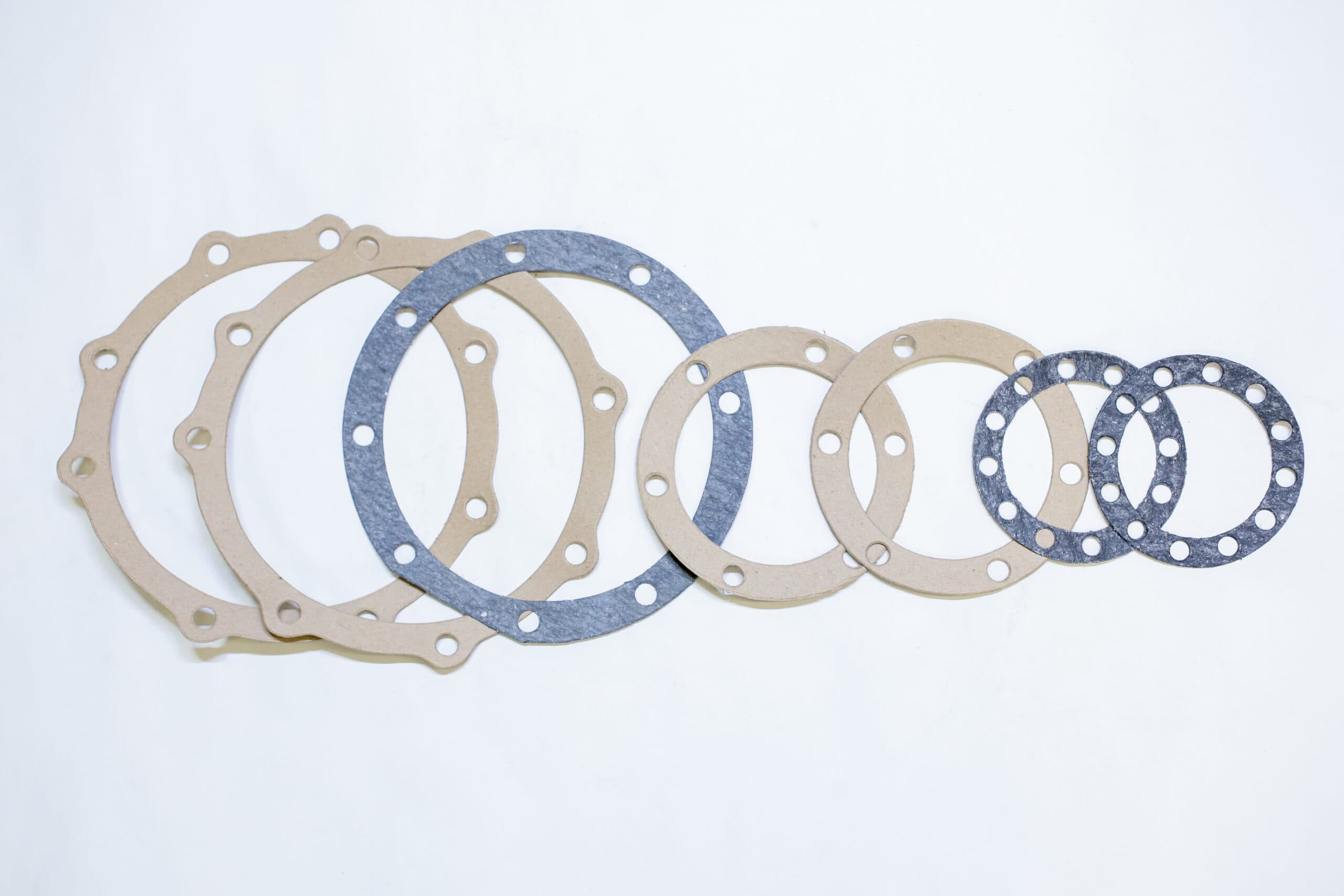
Laser and water jet cut gaskets, with no tooling.
Laser and water jet cutters follow your drawing file directly, so there is no cutting tool to design, make or pay for. That makes them the quick route to prototypes, short runs and parts that change, and water jet cuts thick rubber, foam and PTFE cleanly with no heat. We choose the method for each part from the material, the thickness, the detail and the quantity.
- Parts cut straight from your drawing file
- No tool
- Drawing files we quote from
- DXF, DWG, PDF, STEP
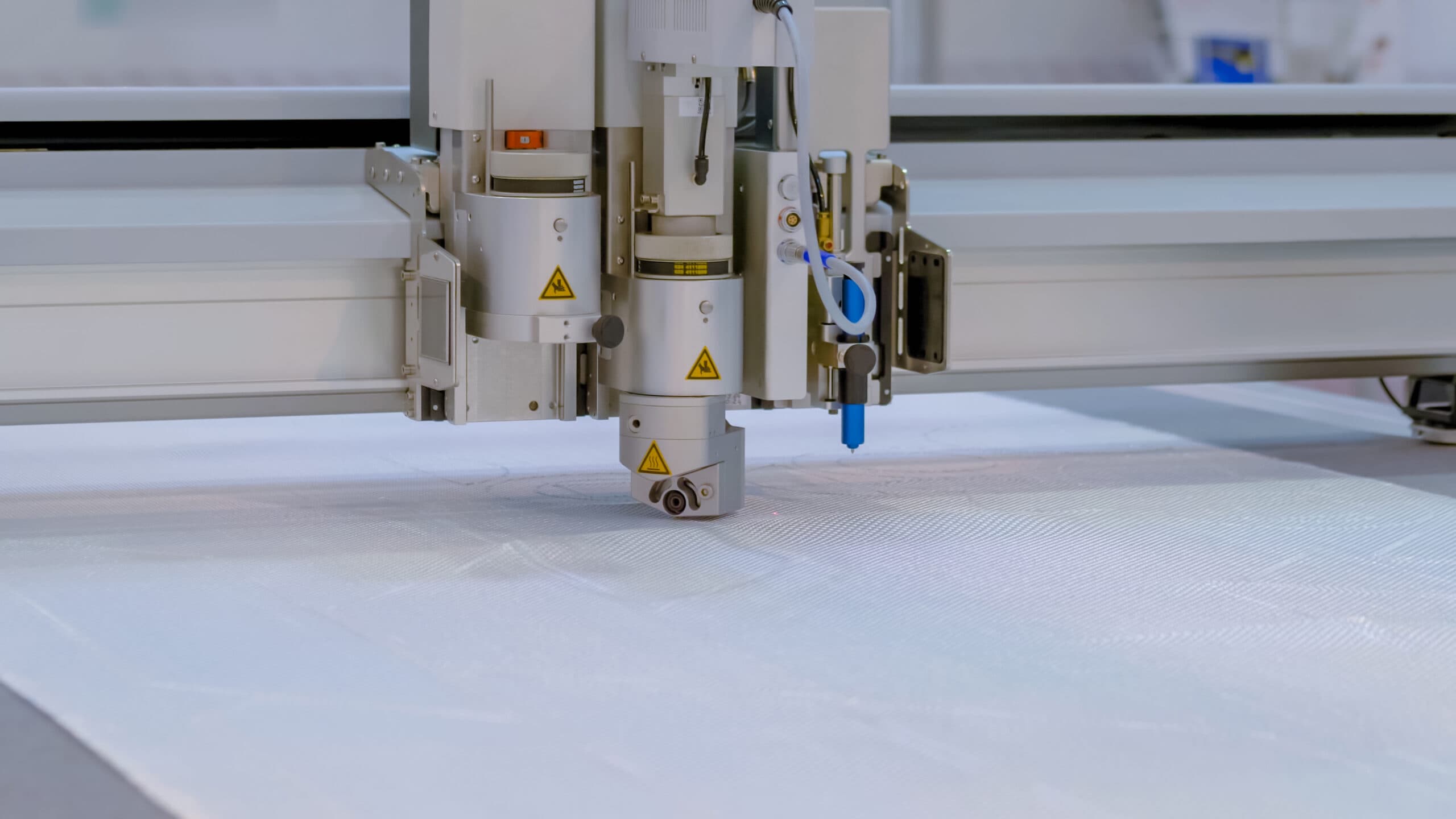
Tool-less cutting
Cutting without a tool: prototypes, short runs and complex parts.
A die holds the shape of a part in steel; a laser or water jet cutter holds it in software. The machine reads the outline from your CAD file and steers a beam or a jet along it, so the first part can be cut as soon as the file is ready. There is no tool charge and no tool lead time, and a revised drawing costs no more than a new file.
The trade-off is speed. A die cuts the whole outline in one stroke, while a tool-less cutter traces every edge, so each part takes longer and the unit price stays higher. For prototypes, pre-production batches, large gaskets that would need an expensive die, and parts ordered in tens or hundreds, cutting without a tool usually costs less overall. When the design is settled and volumes grow, the same drawing can move to die cutting for a lower unit cost.
Computer-guided knife cutters, which drag or oscillate a blade along the cut path, are a third tool-less method, suited to soft gasket materials and foams of moderate thickness. Whichever method we recommend, we tell you why.
Talk to our technical team
Laser cutting
Laser cutting: fine detail and tight tolerances.
For non-metallic materials, a CO2 laser focuses infrared light to a spot a fraction of a millimetre across, and the material along the path melts or vaporises. The cut is narrow, typically 0.1 to 0.3 mm wide, so fine slots, small holes and sharp inside corners that a die cannot form are routine, and tolerances of about ±0.1 mm are typical on thin, stable material. Fibre lasers do the same for metals, which is how thin metal shims are cut to drawing.
Laser cutting suits films, papers, insulation boards, many plastics and thin rubber. Electrical insulators are a good example: parts in Nomex® aramid paper and polyimide film for transformers, motors and generators often need finer detail or tighter tolerances than a die can hold, and that is where we use laser cutting.
Because it cuts with heat, a laser leaves a fused or slightly darkened edge on some materials, and a narrow zone beside the cut is heated. That is harmless for most parts, but it rules the laser out for a few materials, listed below.
Nomex® is a trademark of Arclin or its affiliates. Other names are the trademarks of their owners.
Metal shims cut to drawingLaser safety
Materials usually cut another way than by laser, and why.
Some materials give off corrosive or toxic gases when they burn, and others cut badly with heat. As general guidance, these are usually die cut or water jet cut instead, so the method never compromises the part or the people making it. Some can be laser cut with the right fume extraction, PTFE among them, but another method usually gives a cleaner edge.
If your drawing calls for laser cutting in one of these materials, we will suggest the method that gives the same part safely.
Ask about your materialMaterials and the laser
Why some materials are cut another way
| Material | With a laser | Usually cut instead by |
|---|---|---|
| PVC, rigid sheet and foam | Releases hydrogen chloride gas, which is toxic and corrodes the machine | Die cut or water jet cut |
| Neoprene and other chlorinated rubbers | Releases hydrogen chloride; the edge chars | Die cut or water jet cut |
| PTFE and other fluoropolymers | Releases toxic fluorine compounds; possible only with suitable fume extraction | Die cut thin sheet; water jet cut thick sheet |
| Polycarbonate | Discolours and chars at the edge | Die cut thin gauges; water jet cut thicker sheet |
| Polyurethane foams | Gives off harmful fumes; the edge melts | Die cut or water jet cut |
| Silicone rubber | Leaves a powdery silica residue on the edge | Water jet cut or die cut |
| Rubber and foam over about 10 mm | The edge melts and tapers | Water jet cut |
- PVC, rigid sheet and foam
- Releases hydrogen chloride gas, which is toxic and corrodes the machine
- Usually cut instead by: Die cut or water jet cut
- Neoprene and other chlorinated rubbers
- Releases hydrogen chloride; the edge chars
- Usually cut instead by: Die cut or water jet cut
- PTFE and other fluoropolymers
- Releases toxic fluorine compounds; possible only with suitable fume extraction
- Usually cut instead by: Die cut thin sheet; water jet cut thick sheet
- Polycarbonate
- Discolours and chars at the edge
- Usually cut instead by: Die cut thin gauges; water jet cut thicker sheet
- Polyurethane foams
- Gives off harmful fumes; the edge melts
- Usually cut instead by: Die cut or water jet cut
- Silicone rubber
- Leaves a powdery silica residue on the edge
- Usually cut instead by: Water jet cut or die cut
- Rubber and foam over about 10 mm
- The edge melts and tapers
- Usually cut instead by: Water jet cut
General guidance. We confirm the cutting method for your material with the quotation.
Water jet cutting
Water jet cutting: thick rubber, foam and PTFE with no heat.
A water jet cutter forces water through a jewel orifice at around 4,000 bar or more, producing a jet about 0.1 to 0.3 mm across that cuts soft materials cleanly. For hard materials, such as metals and thick rigid plastics, abrasive garnet is fed into the jet, which widens the cut to about 1 mm. The jet is cold, so there is no melting, no charring and no heat-affected edge.
That makes water jet the method of choice for thick parts: rubber and foam gaskets tens of millimetres thick, solid and sponge silicone gaskets, and thick PTFE plate, which our PTFE gasket guide explains is usually water jet cut. Edges come out square and smooth, without the concave edge a die can leave on thick, soft material.
The jet has limits too. On thick material it spreads slightly, so the cut can taper by a few tenths of a millimetre from top to bottom. Thin films flutter under the jet and cut better by die or laser, and absorbent materials such as cork and paper-based gasket fibre take up water, so they are usually die cut. Water jet parts are dried before they are packed.
Cold, clean and square: water jet is the answer for thick, soft parts.
Choosing a method
Laser, water jet or die cutting? Thickness, tolerance and batch size compared.
The table compares the two tool-less methods with die cutting on the points that usually decide. Values are typical for non-metallic gasket and shim materials; what we can hold on your part depends on the material, its thickness and the shape.
As a rule of thumb: a laser for fine detail in thin material, a water jet for thick or heat-sensitive material, and a die once the quantity justifies the tool. For self-adhesive parts on a liner, a die can kiss cut through the face material and adhesive and stop at the liner.
Cutting methods compared
Typical values, not a specification
| Criterion | Tool-less (Laser / Water jet) | Die cutting |
|---|---|---|
| Material thickness | LaserUp to about 10 mm, by materialWater jetAbout 0.5 to 100 mm and more | About 0.012 to 25 mm; soft foam thicker |
| Typical tolerance | Laser±0.05 to ±0.1 mmWater jet±0.1 to ±0.25 mm | ±0.1 to ±0.4 mm, by tool |
| Width of cut | Laser0.1 to 0.3 mmWater jet0.1 to 0.3 mm; about 1 mm with abrasive | None: a blade removes no material |
| Cutting tool | LaserNoneWater jetNone | A die made for each part |
| Set-up | LaserFrom the drawing fileWater jetFrom the drawing file | Tool designed and made first |
| Edge | LaserFused or slightly darkened on some materialsWater jetSquare, cold and clean; dried after cutting | Clean; slightly concave on thick soft material |
| Best batch size | LaserOne-offs to a few hundred partsWater jetOne-offs to a few hundred; thick parts at any quantity | Hundreds to millions of parts |
- Material thickness
- LaserUp to about 10 mm, by materialWater jetAbout 0.5 to 100 mm and more
- Die cutting: About 0.012 to 25 mm; soft foam thicker
- Typical tolerance
- Laser±0.05 to ±0.1 mmWater jet±0.1 to ±0.25 mm
- Die cutting: ±0.1 to ±0.4 mm, by tool
- Width of cut
- Laser0.1 to 0.3 mmWater jet0.1 to 0.3 mm; about 1 mm with abrasive
- Die cutting: None: a blade removes no material
- Cutting tool
- LaserNoneWater jetNone
- Die cutting: A die made for each part
- Set-up
- LaserFrom the drawing fileWater jetFrom the drawing file
- Die cutting: Tool designed and made first
- Edge
- LaserFused or slightly darkened on some materialsWater jetSquare, cold and clean; dried after cutting
- Die cutting: Clean; slightly concave on thick soft material
- Best batch size
- LaserOne-offs to a few hundred partsWater jetOne-offs to a few hundred; thick parts at any quantity
- Die cutting: Hundreds to millions of parts
General guidance for non-metallic materials; metals are cut with a fibre laser or an abrasive water jet. We confirm the method and tolerance for your part with the quotation.
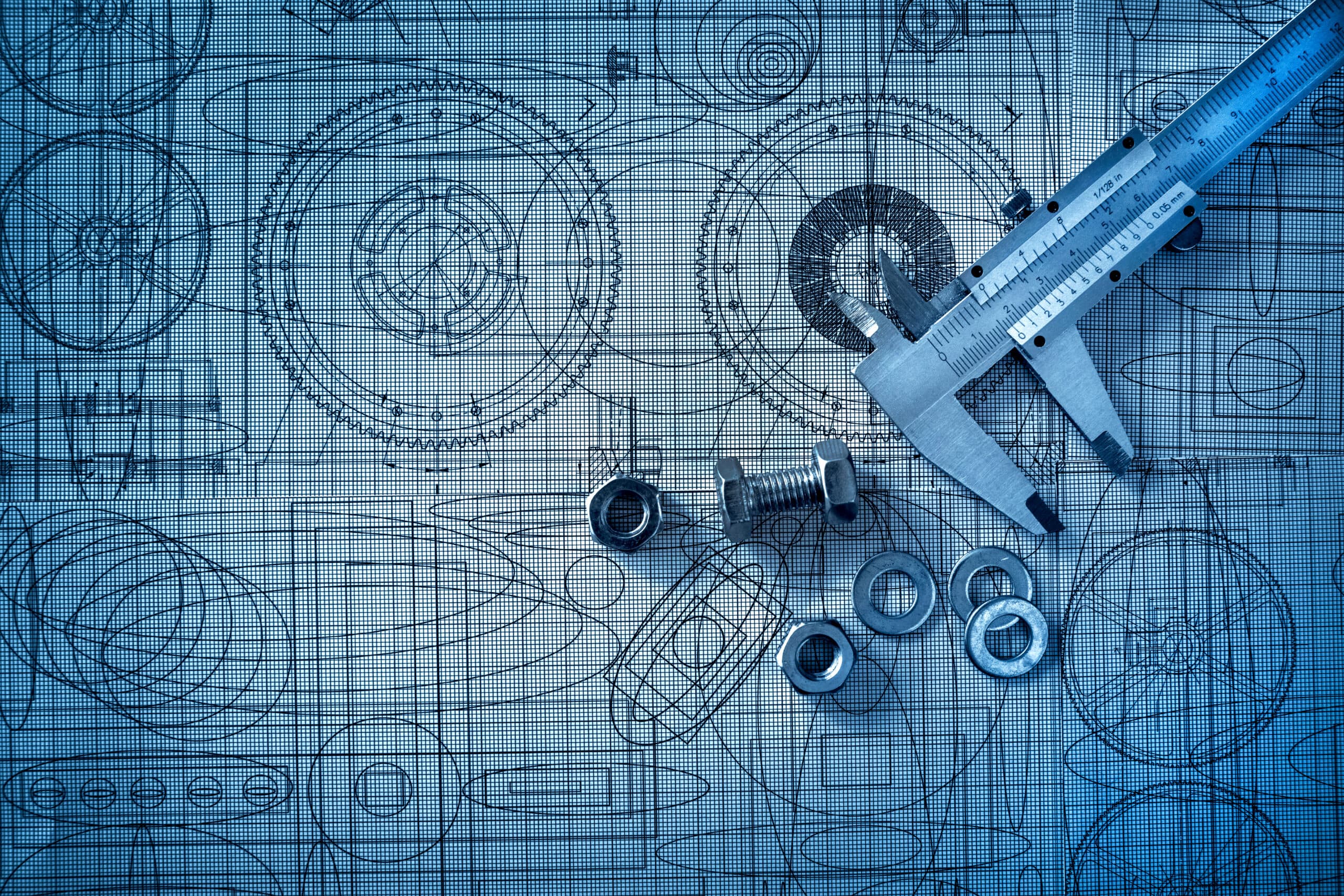
Files and tolerances
Drawing files and tolerances for laser and water jet cutting.
A tool-less cutter cuts exactly what the file says, so a clean file is the quickest route to a correct part.
Send a vector file
DXF or DWG at full size in millimetres is ideal; STEP and IGES models and dimensioned PDF drawings work too. A photo or sketch (PNG or JPG) is fine for a first conversation.
Closed outlines, one part per file
Closed outlines with no duplicate or overlapping lines cut cleanly. Put dimensions, notes and the title block on a separate layer so they are not cut.
Tolerances where they matter
Mark the critical dimensions, such as bolt hole positions, and leave the rest at a general tolerance. We allow for the width of the cut, so draw the finished part.
Material, thickness and quantity
Tell us the material and grade, the thickness and the quantity, now and per year, so we can compare tool-less cutting with a die. Our custom gaskets page lists the materials most often specified.
Handled in confidence
Drawings and files you send us are handled in confidence and used only to quote for and make your parts.
Laser and water jet FAQs
Laser and water jet questions, answered.
Can't find what you need? Our technical team is happy to help.
Can you laser cut rubber gaskets?
Thin nitrile and natural rubber can be laser cut, but the edge melts slightly, and neoprene, a chlorinated rubber, should not be laser cut at all. Most rubber gaskets are die cut or, when they are thick, water jet cut, which leaves a cleaner, cold edge. Tell us the rubber and the thickness and we will recommend the method.
Which materials cannot be laser cut?
PVC and other chlorinated materials such as neoprene, which release hydrogen chloride gas; PTFE and other fluoropolymers, which release toxic fluorine compounds; and polycarbonate and polyurethane foams, which char or give off harmful fumes. We cut these by die or water jet instead.
Water jet or laser?
Choose a laser for fine detail and tight tolerances in thin material, such as films, papers and insulation boards. Choose a water jet for thick parts, for materials that must not be heated, and for materials a laser cannot cut, such as PTFE and PVC. Neither needs a cutting tool.
Is laser cutting cheaper for small quantities?
Usually, yes. With no die to make, the cost is mostly machine time, so a few parts or a few hundred can cost less in total than die cutting once the tool charge is included. As quantities rise, the lower unit cost of die cutting wins. Tell us your quantities and we will compare the two.
What file format do you need?
DXF or DWG at full size in millimetres is best. STEP and IGES models and dimensioned PDF drawings work too, and a photo or sketch is enough to start a conversation. You can upload up to three files with your quote request.
Can you laser cut metal shims?
We supply thin metal shims laser cut to drawing in metals such as stainless steel, brass and aluminium. Our metal shims page lists the metals and the thicknesses we supply, from 0.005 mm foil to 3 mm sheet. Tell us the metal, thickness and tolerance and we will confirm the cutting method.
Send us your drawing
Get a quote for laser and water jet cut parts.
- 01
Send your drawing
Upload a DXF, DWG, PDF or STEP file, or describe the part. Everything you send is handled in confidence.
- 02
Material advice
Our technical team helps you select the right material and thickness for the application.
- 03
Precision cut in-house
Die cutting, precision laser or water jet, chosen to hold your specified tolerances.
- 04
Delivered to your deadline
Manufactured in the UK and shipped worldwide.
Request a quote
Tell us what you need and a member of our technical team will be in touch.
Gasket and shim materials
More materials and methods
- Read more
Cutting methods
Die cutting
Flatbed and rotary die cutting, prototype to volume.
- Read more
Cutting methods
Kiss cutting
Self-adhesive parts on a liner, ready to peel and place.
- Read more
Gasket and sealing materials
Rubber gaskets
Every common elastomer compared, plus insertion, natural and butyl rubber.
- Read more
Electrical insulation and thermal
Electrical insulation materials
Papers, films and sheet cut into insulators.
- Read more
Plastics and components
Engineering plastics
Nylon, acetal, polycarbonate and PVC parts to drawing.
- Read more
Reference
Types of shims
Shim materials, shapes and stacks, and how to specify one.
- Read more
Overview
Gasket and shim materials
Every material we cut, compared in one place.
Our customers