

Kiss cutting
Kiss-cut and self-adhesive components.
Kiss cutting cuts a self-adhesive part through its face material and adhesive but stops at the release liner, so the finished parts stay on the liner, ready to peel off and place. Gaskets, foam pads, thermal pads, insulators and shims arrive in position and quick to fit. Tell us how the part will be fitted, and we will advise on the adhesive, the liner and the format.
- Adhesive thicknesses in our materials list
- 0.050 to 0.130 mm
- The usual formats for kiss-cut parts
- Roll or sheet
How it works
What kiss cutting is, and why the parts stay on the liner.
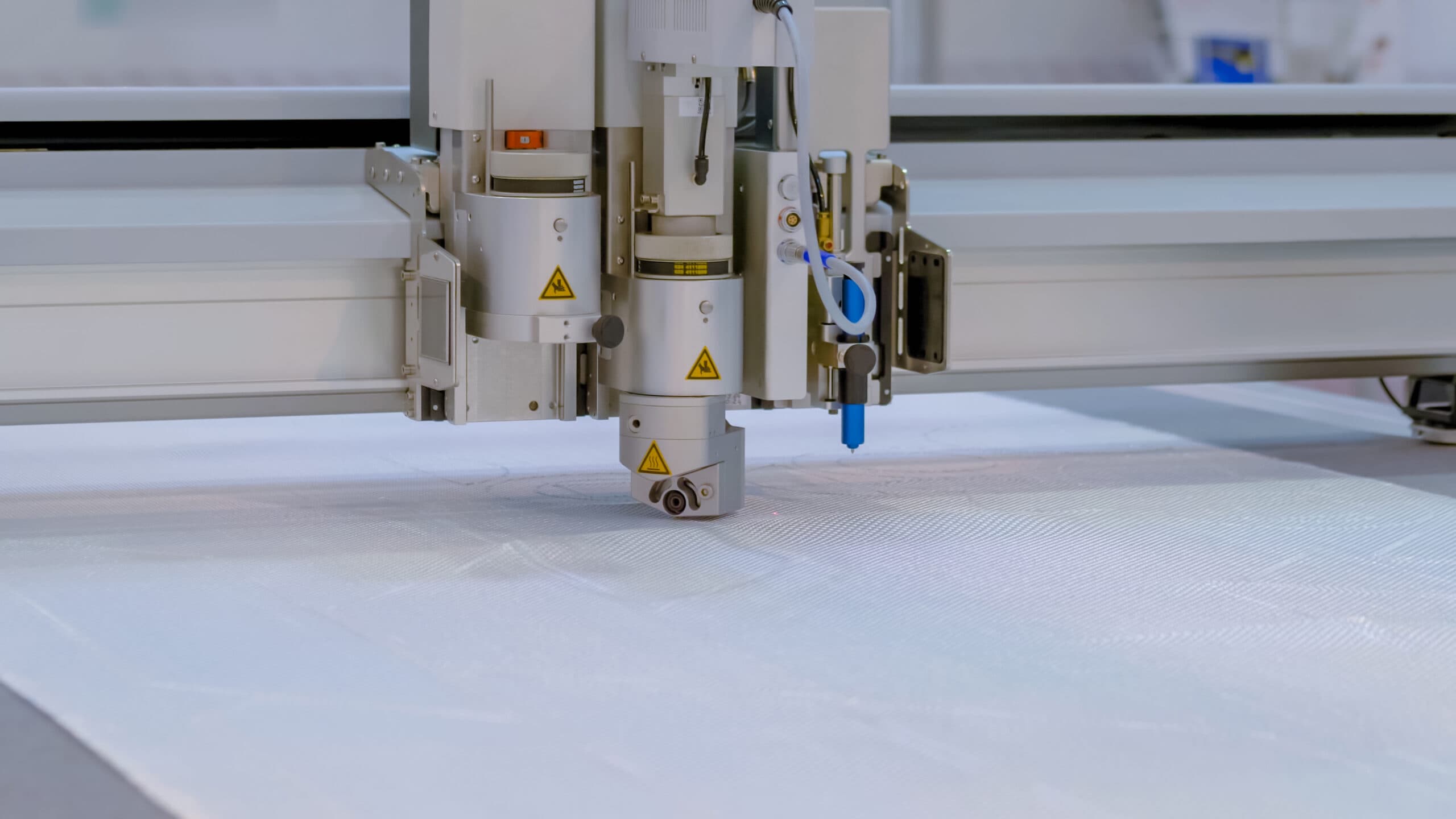
A self-adhesive material is a sandwich: the face material (foam, film, rubber or a thermal pad), a layer of pressure-sensitive adhesive, and a release liner that protects the adhesive until it is used. Kiss cutting sets the depth of the blade so it cuts through the face material and the adhesive and only just touches the liner. The waste around the parts, called the matrix, is peeled away, leaving the parts on the liner exactly where the tool placed them.
The depth is the skill. Cut too shallow and parts tear as they are peeled; cut too deep and the liner splits or parts fall off in transit. Rotary tools and flatbed presses with fine depth control are the usual methods, and lasers and computer-guided knife cutters can kiss cut short runs without a tool. Most of what applies to die cutting tools and tolerances applies here too.
Kiss-cut adhesive parts have been part of our work for aerospace, defence and electronics customers, from adhesive tapes cut to shape to polyimide insulators laminated to an adhesive. Tell us about your part and we will confirm the material, adhesive and format we can supply for it.
Talk to our technical teamKiss cut or through cut
Kiss cut or through cut? How the two compare.
Through cutting cuts the whole sandwich, liner included, so each part comes away loose with its own piece of liner. Kiss cutting leaves the liner whole. The choice depends on how the part is fitted, how many there are, and whether they must arrive in position.
The two are often combined: kiss-cut parts inside a through-cut outline give a small, shaped sheet of parts, such as every pad for one assembly. A back-slit liner, a cut through the liner alone, makes single parts quick to peel.
Through-cut parts: die cuttingKiss cut and through cut
Typical differences
| Feature | How it compares (Kiss cut / Through cut) |
|---|---|
| What is cut | Kiss cutFace material and adhesiveThrough cutFace material, adhesive and liner |
| Liner | Kiss cutPaper or film, typically 0.05 to 0.15 mm, left wholeThrough cutCut with the part |
| How parts arrive | Kiss cutOn a continuous liner, in positionThrough cutLoose, each on its own liner |
| Fitting | Kiss cutPeel and place by hand or by applicatorThrough cutPeel the liner, then place by hand |
| Automatic application | Kiss cutYes, from the rollThrough cutNot usually |
| Material thickness | Kiss cutUsually up to a few millimetresThrough cutAny thickness the method can cut |
| Best for | Kiss cutVolumes, small parts and automated assemblyThrough cutLarge parts, thick material, loose supply |
- What is cut
- Kiss cutFace material and adhesiveThrough cutFace material, adhesive and liner
- Liner
- Kiss cutPaper or film, typically 0.05 to 0.15 mm, left wholeThrough cutCut with the part
- How parts arrive
- Kiss cutOn a continuous liner, in positionThrough cutLoose, each on its own liner
- Fitting
- Kiss cutPeel and place by hand or by applicatorThrough cutPeel the liner, then place by hand
- Automatic application
- Kiss cutYes, from the rollThrough cutNot usually
- Material thickness
- Kiss cutUsually up to a few millimetresThrough cutAny thickness the method can cut
- Best for
- Kiss cutVolumes, small parts and automated assemblyThrough cutLarge parts, thick material, loose supply
General guidance. The right choice depends on the material, the adhesive and how the part is fitted.
Adhesive lamination
Adhesive lamination: choosing an adhesive.
The adhesive is laminated to the face material, from a reel of transfer adhesive or double-sided tape, before the part is cut. The adhesive family decides how well the part sticks, to what, and at what temperature. Values are typical for each family; the data sheet for the adhesive we laminate applies.
The surface matters as much as the adhesive. Metals, glass and most rigid plastics bond easily, while polyethylene, polypropylene, PTFE and powder coatings have low surface energy and need an adhesive made for them. Bond strength builds over the first 24 to 72 hours after the part is pressed on, and clean, dry surfaces at room temperature give the best result.
We confirm the adhesive, its thickness and the liner for your part with the quotation.
Ask about an adhesivePressure-sensitive adhesives compared
Typical values, not a specification
| Adhesive family | Typical service temperature | Bonds to, and typical use |
|---|---|---|
| Standard acrylic | -40°C to +100°C | Metals, glass and most plastics; general assembly, good ageing and UV resistance |
| High-temperature acrylic | -40°C to +150°C, short peaks to about +200°C | Metals and high-energy plastics; parts near heat and in electronics |
| Modified acrylic for low-energy surfaces | -40°C to +90°C | Polyethylene, polypropylene and powder coat; foams and plastic housings |
| Rubber-based | -20°C to +60°C | Foams, fabrics and low-energy plastics; fast grab, indoor use |
| Silicone | -60°C to +260°C | Silicone rubber, polyimide film and PTFE; high-temperature insulation and masking |
- Standard acrylic
- -40°C to +100°C
- Bonds to, and typical use: Metals, glass and most plastics; general assembly, good ageing and UV resistance
- High-temperature acrylic
- -40°C to +150°C, short peaks to about +200°C
- Bonds to, and typical use: Metals and high-energy plastics; parts near heat and in electronics
- Modified acrylic for low-energy surfaces
- -40°C to +90°C
- Bonds to, and typical use: Polyethylene, polypropylene and powder coat; foams and plastic housings
- Rubber-based
- -20°C to +60°C
- Bonds to, and typical use: Foams, fabrics and low-energy plastics; fast grab, indoor use
- Silicone
- -60°C to +260°C
- Bonds to, and typical use: Silicone rubber, polyimide film and PTFE; high-temperature insulation and masking
Typical values for each family. Transfer adhesive in our materials list runs from 0.050 to 0.130 mm thick.
Rolls and sheets
Rolls for automatic application, sheets for hand assembly.
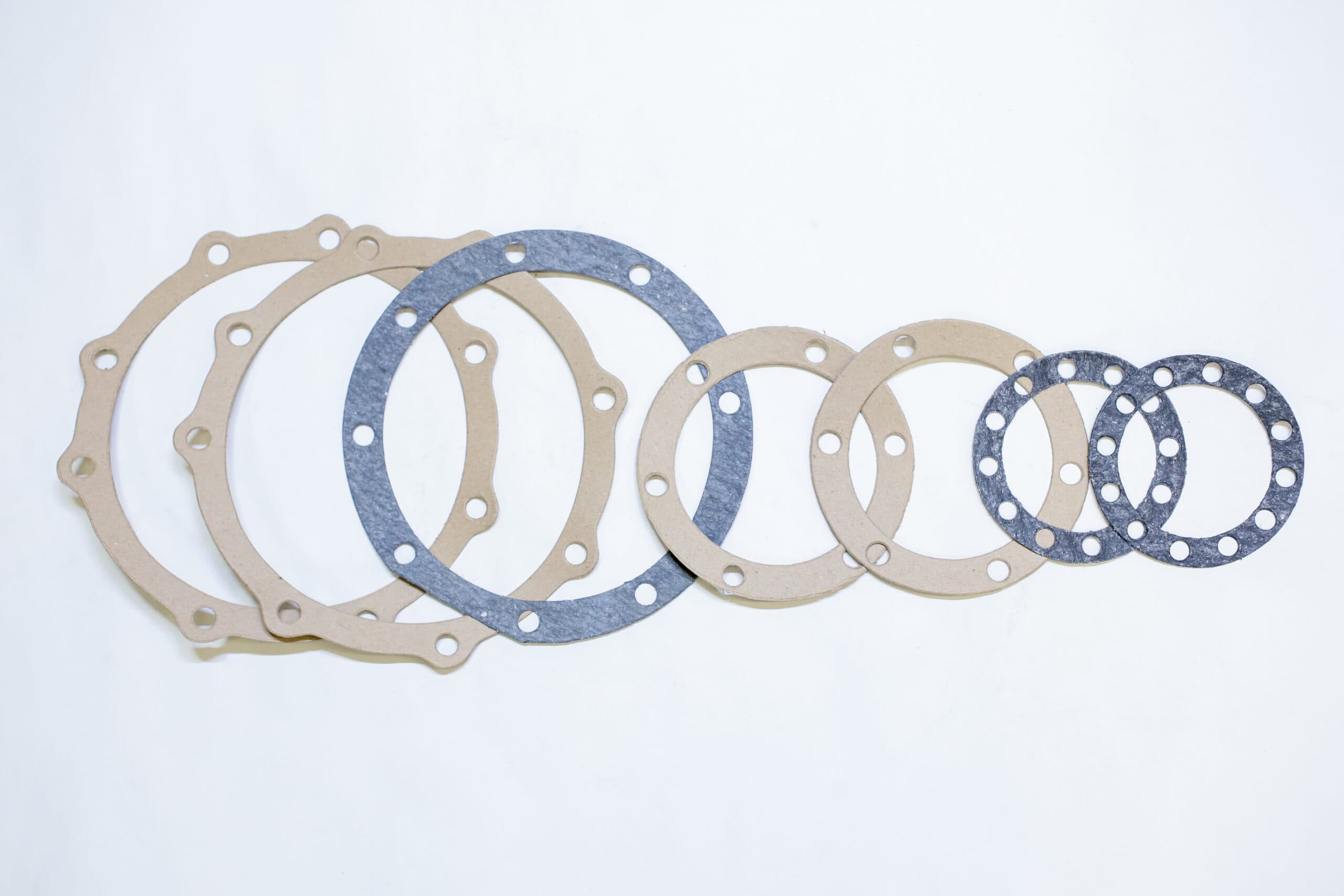
Kiss-cut parts on a roll suit dispensing and labelling machines and high-volume lines. Tell us the core size, the roll diameter or the number of parts per roll, the gap between parts, the unwind direction, and whether the waste matrix should be removed. Parts can run in one lane or several side by side.
Sheets suit hand assembly, short runs and parts fitted in sets, such as every gasket for one enclosure on a single sheet. Give us the sheet size and the parts per sheet, and say whether the matrix should stay on, which protects the edges and keeps small parts in place, or come off, which makes them faster to pick. An extended liner or an adhesive-free lift tab makes small parts quick to peel.
We cut cores in house to 76 mm (3 inch) and 152 mm (6 inch), so roll formats can match the applicator on your line.
Custom shims and parts to drawingMaterials
Materials that kiss cut well, from foam to Polymex® shimstock.
Most thin, flexible materials can be laminated to an adhesive and kiss cut. These are the ones we are asked for most, with the thicknesses from our current materials lists. Whether a given thickness kiss cuts cleanly depends on its density and stretch, and we confirm it for your part.
For thermally conductive pads, see thermal interface materials; for high-temperature insulators, Kapton® polyimide film; for sealing and cushioning, foam gaskets. Self-adhesive Polymex® shimstock keeps colour-coded shims in place while an assembly is built up, and the shim stack calculator works out which shims make up a gap.
Polymex® is a trademark of PSG. Kapton® is a registered trademark of its owner. Other names are the trademarks of their owners.
Materials for kiss cutting
Thicknesses we cut, from our materials lists
| Material | Thicknesses we cut | Kiss cutting notes |
|---|---|---|
| Closed-cell foams (polyethylene, PVC, neoprene) | 1.000 to 50.000 mm, by foam | Thin foams kiss cut cleanly; thick foam is usually cut through |
| Kapton® polyimide film | 0.023 to 0.125 mm | Laminated to acrylic or silicone adhesive for insulators and masks |
| Polyester film | 0.012 to 0.500 mm | Insulators, spacers and labels on a film liner |
| Thermal interface pads | 0.150 to 6.350 mm | Often naturally tacky; supplied on a liner, cut to the component |
| Polymex® shimstock | 0.012 to 3.000 mm | Thin gauges with adhesive kiss cut; thick gauges are cut through |
| Rubber and silicone sheet | 1.000 to 25.000 mm | Thin sheet takes an adhesive; silicone needs a silicone adhesive |
| Transfer adhesive | 0.050 to 0.130 mm | Cut to shape on its own as a die-cut adhesive |
- Closed-cell foams (polyethylene, PVC, neoprene)
- 1.000 to 50.000 mm, by foam
- Kiss cutting notes: Thin foams kiss cut cleanly; thick foam is usually cut through
- Kapton® polyimide film
- 0.023 to 0.125 mm
- Kiss cutting notes: Laminated to acrylic or silicone adhesive for insulators and masks
- Polyester film
- 0.012 to 0.500 mm
- Kiss cutting notes: Insulators, spacers and labels on a film liner
- Thermal interface pads
- 0.150 to 6.350 mm
- Kiss cutting notes: Often naturally tacky; supplied on a liner, cut to the component
- Polymex® shimstock
- 0.012 to 3.000 mm
- Kiss cutting notes: Thin gauges with adhesive kiss cut; thick gauges are cut through
- Rubber and silicone sheet
- 1.000 to 25.000 mm
- Kiss cutting notes: Thin sheet takes an adhesive; silicone needs a silicone adhesive
- Transfer adhesive
- 0.050 to 0.130 mm
- Kiss cutting notes: Cut to shape on its own as a die-cut adhesive
Adhesive-backed and kiss-cut formats are confirmed for each part with the quotation.
Kiss cutting FAQs
Kiss cutting questions, answered.
Can't find what you need? Our technical team is happy to help.
What is kiss cutting?
Kiss cutting is a cut through the top layers of a self-adhesive material, the face material and its adhesive, that stops at the release liner. Once the waste is removed, the parts stay on the liner in position, ready to be peeled off and placed by hand or by machine.
What is the difference between kiss cutting and die cutting?
Kiss cutting is a form of die cutting. Ordinary die cutting cuts right through the material, so each part comes away loose. Kiss cutting controls the blade depth so the liner stays whole and the parts stay on it. Many parts combine the two: kiss-cut parts on a through-cut, shaped liner.
Which adhesives can you laminate?
Pressure-sensitive adhesives in the main families: standard and high-temperature acrylics, modified acrylics for low-energy plastics, rubber-based adhesives and silicones. The right one depends on the surfaces, the temperature and how long the part must stay put. We confirm the adhesive for your part, with its data sheet, when we quote.
Can kiss-cut parts be supplied on a roll?
Rolls are the usual format for kiss-cut parts that are fitted by machine. Tell us the core size, the roll diameter or part count, the spacing, the unwind direction and whether the waste matrix should be removed, and we will confirm the roll format we can supply. For hand assembly, sheets are often easier to handle.
Can you add adhesive to Polymex® shims?
Polymex® colour-coded shimstock can be backed with a pressure-sensitive adhesive, so shims stay in place while an assembly is built up and set. Thin gauges can then be kiss cut on a liner. Tell us the gauges, the surfaces and the temperature, and we will confirm the adhesive and the format.
Will the adhesive withstand heat?
It depends on the family. Standard acrylics typically hold to about 100°C, high-temperature acrylics to about 150°C with short peaks near 200°C, and silicone adhesives to about 260°C, while rubber-based adhesives soften above about 60°C. Tell us the continuous and peak temperatures and we will choose to suit.
Send us your drawing
Get a quote for kiss-cut and self-adhesive parts.
- 01
Send your drawing
Upload a DXF, DWG, PDF or STEP file, or describe the part. Everything you send is handled in confidence.
- 02
Material advice
Our technical team helps you select the right material and thickness for the application.
- 03
Precision cut in-house
Die cutting, precision laser or water jet, chosen to hold your specified tolerances.
- 04
Delivered to your deadline
Manufactured in the UK and shipped worldwide.
Request a quote
Tell us what you need and a member of our technical team will be in touch.
Gasket and shim materials
More materials and methods
- Read more
Cutting methods
Die cutting
Flatbed and rotary die cutting, prototype to volume.
- Read more
Cutting methods
Laser and water jet cutting
Cutting without a tool, for prototypes and thick parts.
- Read more
Gasket and sealing materials
Rubber gaskets
Every common elastomer compared, plus insertion, natural and butyl rubber.
- Read more
Electrical insulation and thermal
Electrical insulation materials
Papers, films and sheet cut into insulators.
- Read more
Plastics and components
Engineering plastics
Nylon, acetal, polycarbonate and PVC parts to drawing.
- Read more
Reference
Types of shims
Shim materials, shapes and stacks, and how to specify one.
- Read more
Overview
Gasket and shim materials
Every material we cut, compared in one place.
Our customers