

Thermal interface materials
Thermal interface materials, cut to your component.
Even flat metal surfaces touch over only a fraction of their area, and the air left between them is a poor conductor of heat. Thermal interface pads replace that air. We die cut Gap Pad® gap fillers and Sil-Pad® thermally conductive insulators to the footprint of your component, from stock grades.
- Thermal pad thicknesses we cut
- 0.15 to 6.35 mm
- Typical range of silicone thermal pads
- -60°C to +200°C
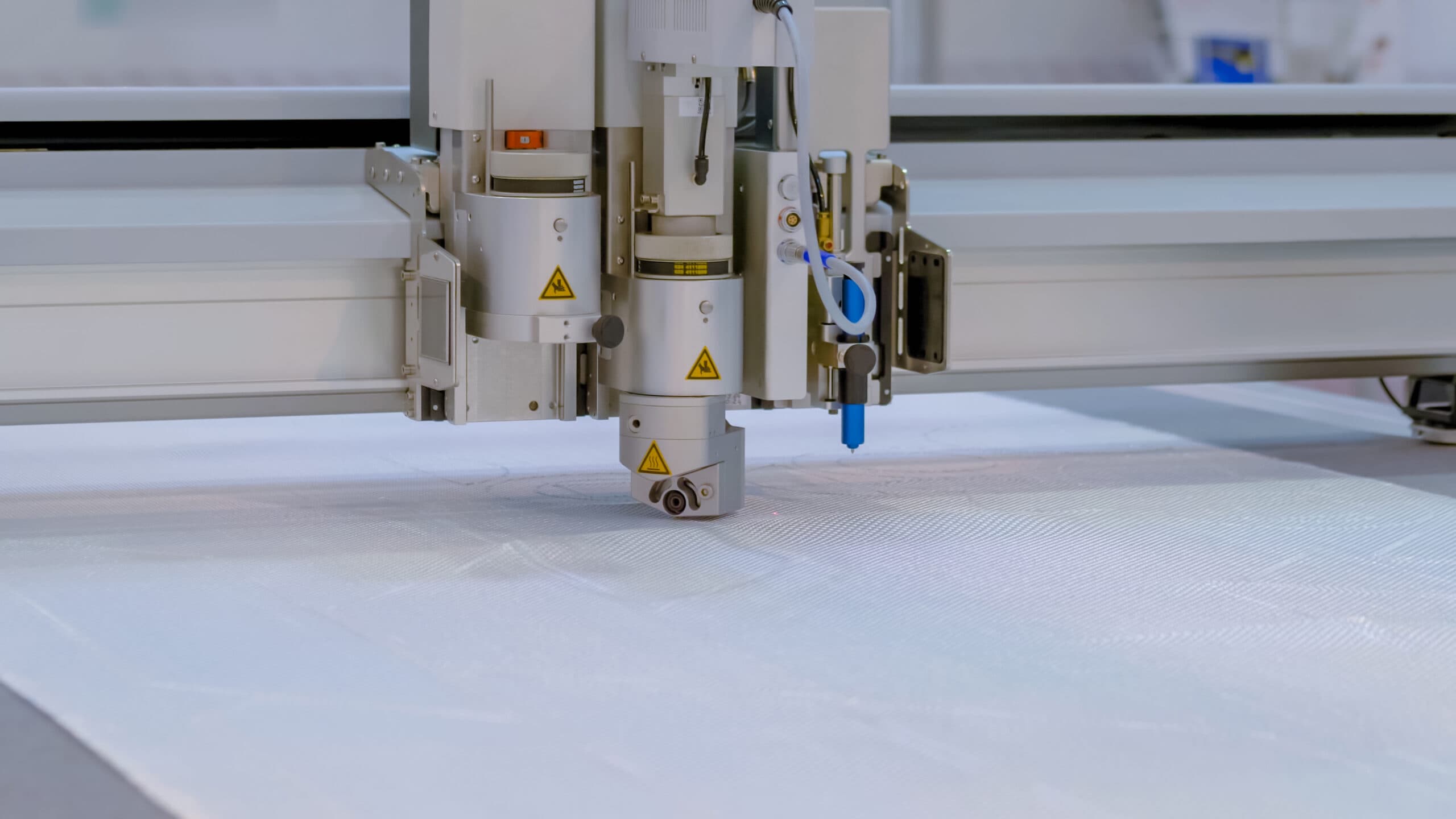
Why it matters
Why the thermal interface matters.
Heat leaves a power device through its case and into a heat sink, chassis or cooling plate. Where the two surfaces meet, machining marks, flatness errors and tolerances leave a layer of trapped air, and air conducts heat poorly, at about 0.026 W/m·K. The result can be a large temperature rise across a joint that looks perfectly tight. A thermal interface material replaces the air with something that conducts heat dozens of times better and conforms to both surfaces.
What counts is the total thermal resistance of the joint: the material's thermal conductivity, the thickness it ends up at once compressed, and the contact resistance at each face. A thin, conformable pad often beats a thicker one with a higher conductivity: 0.25 mm of a 1.5 W/m·K material has less resistance through its thickness than 2 mm of a 5 W/m·K material.
Thermal pads often do a second job. Many are electrical insulators, so one pad can both cool and isolate a transistor mounted on an earthed heat sink. That makes the pad part of the insulation design as well as the thermal design, and our guide to electrical insulation materials covers the other insulators we cut.
Electrical insulation materialsTypes
Gap fillers, thermally conductive insulators and the alternatives.
Gap fillers are soft, thicker pads that take up uneven gaps; thermally conductive insulators are thin, tough pads that isolate a device from its heat sink. Grease, mica and ceramic are the older alternatives. Choose what the interface needs to see which types qualify.
What does the interface need?
Choose properties to find the right material. 5 materials compared.
| Requirement | Gap filler pad | Insulating thermal pad | Thermal grease | Mica and grease | Ceramic insulator |
|---|---|---|---|---|---|
| Fills gaps of 0.25 mm or more | Yes | No | No | No | No |
| Absorbs component height tolerances | Yes | No | No | No | No |
| Electrically insulatingCheck the breakdown voltage; not every gap filler is rated as an insulator. | Yes | Yes | No | Yes | Yes |
| Thinnest bond lineGrease alone does not insulate. | No | No | Yes | No | No |
| Clean to assemble, no pump-out | Yes | Yes | No | No | Yes |
| Works at low clamping pressure | Yes | No | Yes | No | No |
| Resists cut-through under high clamping pressure | No | Yes | No | No | Yes |
| Damps vibration | Yes | No | No | No | No |
| Cut to a custom shape from sheet | Yes | Yes | No | Yes | No |
General guidance; properties vary by grade and manufacturer. Phase change pads, which soften at operating temperature, and graphite sheet are further options: ask us about availability.
Data sheets
Reading a thermal pad data sheet.
Thermal pad data sheets look alike but are not always measured alike, so compare grades tested by the same method, at the same thickness and pressure. Thermal conductivity describes the material; thermal impedance describes the pad in a joint, contact resistance included, and is the better guide to performance.
For a gap filler, choose a pad slightly thicker than the largest gap, so that it is compressed in assembly, commonly by around 10% to 30% within the deflection the data sheet allows, and check the pressure that puts on the component. For an insulating pad, check the breakdown voltage against your working voltage with your design margin, and the clamping pressure against the data sheet.
Talk to our technical teamThermal pad data: what to look for
General values, not a specification
| Property | What it tells you | Typical range |
|---|---|---|
| Thermal | ||
| Thermal conductivity | How well the material conducts heat | Gap fillers about 1 to 5 W/m·K; insulating pads about 0.9 to 3.5 W/m·K |
| Thermal impedance | Resistance of the pad in a joint, at a stated pressure and thickness | In °C·cm²/W; lower is better |
| Operating temperature | The range the material is rated for | About -60°C to +200°C for silicone grades |
| Mechanical | ||
| Hardness | How soft the pad is, and so how well it conforms | Gap fillers about 10 to 70 Shore 00; insulating pads about 80 to 95 Shore A |
| Deflection against pressure | How far a gap filler compresses at a given load | Read from the curve for your thickness |
| Electrical | ||
| Breakdown voltage | The voltage at which the pad fails as an insulator | Typically 3 to 6 kV AC on many grades |
| Flammability | Flame rating of the grade | UL 94 V-0 on many grades |
Thermal
- Thermal conductivity
- How well the material conducts heat
- Typical range: Gap fillers about 1 to 5 W/m·K; insulating pads about 0.9 to 3.5 W/m·K
- Thermal impedance
- Resistance of the pad in a joint, at a stated pressure and thickness
- Typical range: In °C·cm²/W; lower is better
- Operating temperature
- The range the material is rated for
- Typical range: About -60°C to +200°C for silicone grades
Mechanical
- Hardness
- How soft the pad is, and so how well it conforms
- Typical range: Gap fillers about 10 to 70 Shore 00; insulating pads about 80 to 95 Shore A
- Deflection against pressure
- How far a gap filler compresses at a given load
- Typical range: Read from the curve for your thickness
Electrical
- Breakdown voltage
- The voltage at which the pad fails as an insulator
- Typical range: Typically 3 to 6 kV AC on many grades
- Flammability
- Flame rating of the grade
- Typical range: UL 94 V-0 on many grades
Typical values for common silicone-based grades. The data sheet for the grade we supply applies.
What we cut
Thermal pad thicknesses we cut.
We cut Gap Pad® gap fillers and Sil-Pad® thermally conductive insulators in the thicknesses below, and hold stock of popular grades so parts can be turned round quickly. Tell us the component, the gap, the voltage and the heat to be moved, and we will suggest a grade and thickness. If your drawing names a particular grade or another make of pad, send it to us and we will confirm what we can supply.
Thermal pads are often specified alongside cut insulators and shims, and our custom shims page lists the full range of materials we cut.
Gap Pad® is a trademark of Henkel. Sil-Pad® is a trademark of Henkel. Other names are the trademarks of their owners.
Grade advice
We match the pad to the gap, the pressure and the voltage.
Cut to the footprint
Holes, slots and cut-outs to suit the device and its fixings.
Thermal pads from PSG
Materials and thicknesses
| Material | Available thicknesses |
|---|---|
| Gap Pad® gap filler pads | 0.254 to 6.350 mm |
| Sil-Pad® thermally conductive insulators | 0.150 to 0.375 mm |
| Stock | Ask about availability; it is confirmed with the quotation |
| Other thermal pads | On request |
| Formats | Loose die-cut parts, or kiss cut on a liner |
- Gap Pad® gap filler pads
- 0.254 to 6.350 mm
- Sil-Pad® thermally conductive insulators
- 0.150 to 0.375 mm
- Stock
- Ask about availability; it is confirmed with the quotation
- Other thermal pads
- On request
- Formats
- Loose die-cut parts, or kiss cut on a liner
Other grades and thicknesses on request.
Applications
Where thermal pads are used.
Thermal pads sit wherever a hot component meets a heat sink, a chassis or a cooling plate.
Power electronics
Power semiconductors
Transistors, diodes and power modules mounted on heat sinks, often isolated by an insulating pad.
- Energy & Renewables
Batteries
Battery packs
Gap fillers between cells, modules and cooling plates in vehicle and energy storage packs.
Power conversion
Power supplies and telecoms
Pads between chips, magnetics and enclosures in power supplies, chargers and telecoms equipment.
- Industrial
Lighting
LED lighting
Pads between LED boards and housings, where heat decides the life of the light.
- Aerospace
Aerospace
Avionics and aircraft systems
Interface pads for electronics that must cope with vibration, altitude and wide temperature swings.
- Security & Defence
Defence
Defence electronics
Thermal interface pads for rugged equipment where cooling is safety critical.
Cutting thermal pads
Cutting thermal pads: die cut and kiss cut on a liner.
Thermal pads are soft, tacky and often thin, so how they are cut and presented matters as much as the grade.
Die cut to the footprint
A cutting tool made to your drawing gives repeatable parts with holes for fixings and cut-outs around components. Our die cutting page explains how tooling works.
Kiss cut on a liner
Parts can be kiss cut through the pad but not its carrier, so they arrive on a sheet or roll and peel off ready to place, which suits production lines.
Liners and tack
Most pads come with protective liners on both faces, and many gap fillers are naturally tacky, which holds them in place during assembly. Remove the liners before fitting unless the data sheet says otherwise.
Tolerances on soft materials
Soft gap fillers stretch as they are handled, so their cut tolerances are wider than on rigid sheet. Grades reinforced with a glass carrier handle better and resist tearing.
What to send us
A drawing, the grade or the thermal and voltage requirement, the gap or the device, and the quantity.
Thermal interface FAQs
Thermal interface questions, answered.
Can't find what you need? Our technical team is happy to help.
What is a gap pad?
A gap pad is a soft, thermally conductive pad, usually silicone filled with ceramic particles, that fills the air gap between a hot component and a heat sink or chassis. It compresses to take up uneven surfaces and height tolerances, and many grades are also electrical insulators. Gap Pad® is a range made by Henkel; we cut it from 0.254 to 6.350 mm.
What is the difference between a gap pad and a Sil-Pad®?
A gap pad is soft and relatively thick, made to fill gaps and absorb tolerances at low pressure. A Sil-Pad® is a thin, tough, glass-reinforced silicone pad made to isolate a device electrically from its heat sink under clamping pressure, as a clean replacement for mica and grease. Gap fillers conform; insulating pads resist cut-through.
How thick should a thermal pad be?
For a gap filler, choose a thickness slightly greater than the largest gap, so the pad is compressed in assembly, commonly by around 10% to 30%, and check the resulting pressure on the component. For an insulating pad, use the thinnest grade that gives the breakdown voltage you need, because a thinner pad has a lower thermal resistance.
Are thermal pads electrically insulating?
Most silicone thermal pads are, and insulating pads such as Sil-Pad® are made for the purpose, with breakdown voltages of several kilovolts. Some gap fillers and graphite-based materials are not rated as insulators, so check the breakdown voltage and volume resistivity on the data sheet before relying on a pad for isolation.
Can you cut thermal pads to my drawing?
Yes. We die cut thermal pads to your drawing, with holes, slots and cut-outs, as loose parts or on a liner ready for assembly. Send us the drawing, the grade or the thermal and voltage requirement, and the quantity, and we will quote for the cut pads.
Do you hold stock of thermal pads?
We hold stock of popular Gap Pad® and Sil-Pad® grades, so parts in those grades can usually be turned round quickly. Other grades are bought in for your order. Tell us the grade and your quantities when you ask for a quote.
Have a thermal pad to specify?
Send us the drawing, the gap, the voltage and the heat to be moved, and our technical team will recommend a grade and quote for the cut pads.
Gasket and shim materials
More materials and methods
Kapton® is a registered trademark of its owner. Nomex® is a trademark of Arclin or its affiliates. Other names are the trademarks of their owners.
- Read more
Electrical insulation and thermal
Electrical insulation materials
Papers, films and sheet cut into insulators.
- Read more
Electrical insulation and thermal
Nomex® insulation
Aramid paper and pressboard for motors and transformers.
- Read more
Electrical insulation and thermal
Kapton® polyimide film
High-temperature film cut into insulators and shims.
- Read more
Gasket and sealing materials
Rubber gaskets
Every common elastomer compared, plus insertion, natural and butyl rubber.
- Read more
Plastics and components
Engineering plastics
Nylon, acetal, polycarbonate and PVC parts to drawing.
- Read more
Cutting methods
Die cutting
Flatbed and rotary die cutting, prototype to volume.
- Read more
Reference
Types of shims
Shim materials, shapes and stacks, and how to specify one.
- Read more
Overview
Gasket and shim materials
Every material we cut, compared in one place.
Our customers