
Kapton® polyimide film
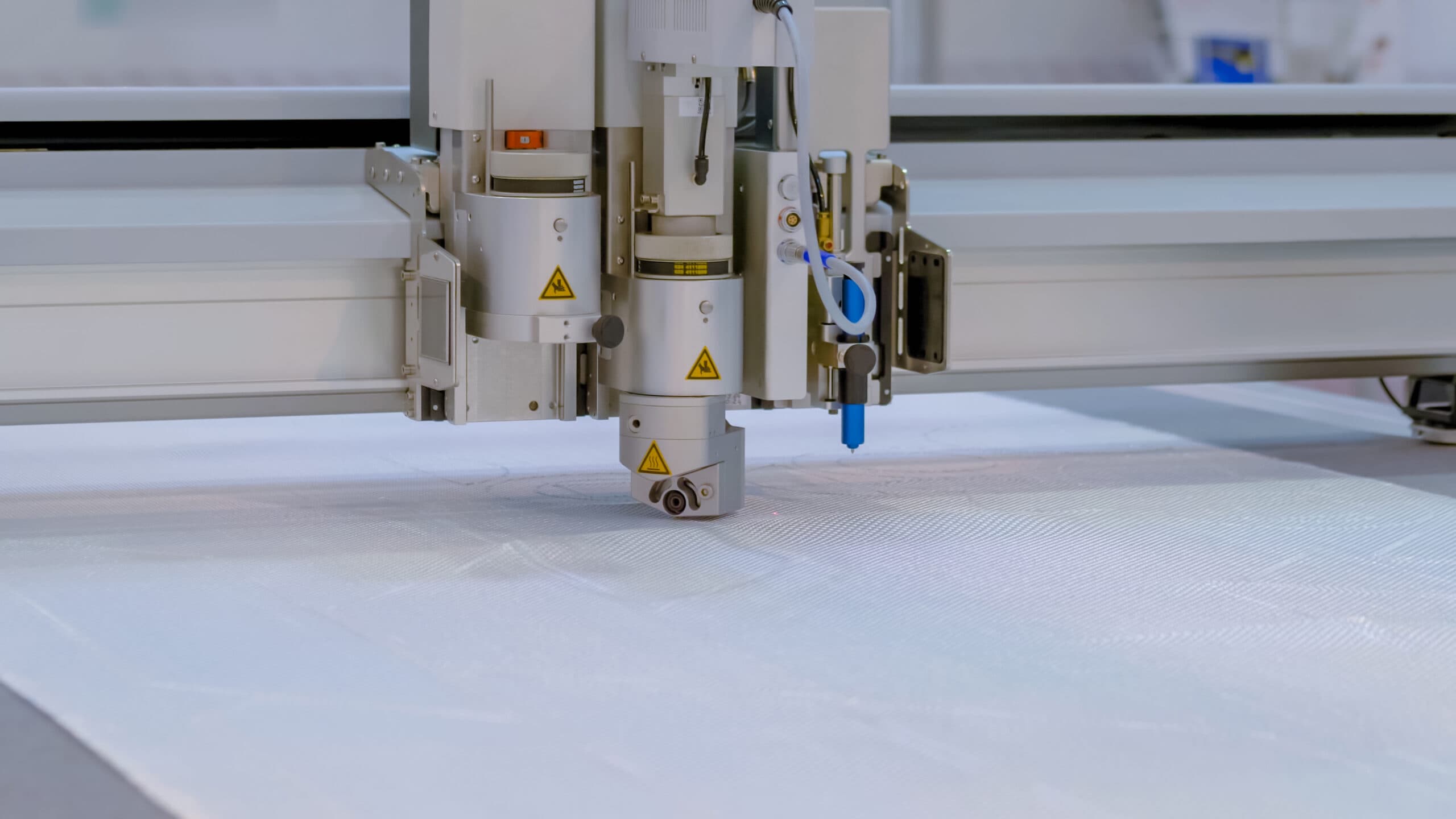
Kapton® polyimide film, cut into parts.
Kapton® polyimide film stays flexible and insulating from cryogenic cold to several hundred degrees, at thicknesses measured in microns. We cut Kapton® from 23 to 125 microns into insulators, washers, shims and self-adhesive parts to your drawing.
- Kapton® thicknesses we cut
- 23 to 125 µm
- Range of Kapton® HN, top of range short term
- -269°C to +400°C
What Kapton® is
What Kapton® polyimide film is.
Kapton® is a polyimide film. The general-purpose type, Kapton® HN, is an all-polyimide film made from pyromellitic dianhydride and oxydianiline, and its rigid, ring-rich molecular chain is what gives it its unusual range. It has no melting point, it is inherently flame retardant, and it has been used from -269°C, close to absolute zero, to 400°C for short periods.
That range, with a dielectric strength of about 300 kV/mm on 25 micron film, is why Kapton® appears wherever thin insulation meets heat: motor and coil insulation, flexible printed circuits, wire and cable wraps, and parts that must survive soldering. It resists most organic solvents, oils and fuels, and stays flexible in the cold, where many plastics turn brittle.
Know its limits too. Kapton® costs several times as much as polyester. It is strong, but once nicked it tears easily, so cut parts need clean edges and radiused inside corners. It takes up more moisture than polyester, and strong alkalis attack it. Our guide to electrical insulation materials compares it with papers and sheet.
Insulation materials comparedProperties
Kapton® HN properties for insulator design.
These are typical published values for 25 micron Kapton® HN, for comparing materials at the design stage. Thicker film has a lower dielectric strength per millimetre but a higher breakdown voltage, and the data sheet for the film we supply applies to your part.
Notice how much strength Kapton® keeps when hot: at 200°C it still has about 60% of its room-temperature tensile strength, at a temperature beyond the rating of polyester film.
Kapton® parts cut to your drawingKapton® HN (25 µm): typical properties
General values, not a specification
| Property | Typical value |
|---|---|
| General | |
| Density | 1.42 g/cm³ |
| Standard thicknesses | 25, 50, 75 and 125 µm |
| Flammability | UL 94 V-0; limiting oxygen index about 37% |
| Mechanical | |
| Tensile strength at 23°C | 231 MPa |
| Tensile strength at 200°C | 139 MPa |
| Elongation at break (23°C) | 72% |
| Thermal | |
| Service temperature | -269°C to +400°C (short term at the top of the range) |
| Glass transition | 360°C to 410°C |
| Shrinkage (30 minutes at 150°C) | 0.17% |
| Linear expansion (-14°C to 38°C) | 20 × 10⁻⁶ per °C |
| Thermal conductivity | 0.12 W/m·K |
| Electrical | |
| Dielectric strength (60 Hz) | 303 kV/mm |
| Relative permittivity (1 kHz) | 3.4 |
| Dissipation factor (1 kHz) | 0.0018 |
| Volume resistivity | 1.5 × 10¹⁷ Ω·cm |
| Chemical | |
| Resistant to | Most organic solvents, oils and fuels |
| Attacked by | Strong alkalis; long exposure to hot water or steam |
General
- Density
- 1.42 g/cm³
- Standard thicknesses
- 25, 50, 75 and 125 µm
- Flammability
- UL 94 V-0; limiting oxygen index about 37%
Mechanical
- Tensile strength at 23°C
- 231 MPa
- Tensile strength at 200°C
- 139 MPa
- Elongation at break (23°C)
- 72%
Thermal
- Service temperature
- -269°C to +400°C (short term at the top of the range)
- Glass transition
- 360°C to 410°C
- Shrinkage (30 minutes at 150°C)
- 0.17%
- Linear expansion (-14°C to 38°C)
- 20 × 10⁻⁶ per °C
- Thermal conductivity
- 0.12 W/m·K
Electrical
- Dielectric strength (60 Hz)
- 303 kV/mm
- Relative permittivity (1 kHz)
- 3.4
- Dissipation factor (1 kHz)
- 0.0018
- Volume resistivity
- 1.5 × 10¹⁷ Ω·cm
Chemical
- Resistant to
- Most organic solvents, oils and fuels
- Attacked by
- Strong alkalis; long exposure to hot water or steam
Typical published values for Kapton® HN. Ask for the data sheet of the film we supply.
Kapton® or polyester
Kapton® or polyester film for insulation?
Polyester covers most insulation up to Class B (130°C) at a fraction of the cost. Kapton® earns its price above that, near soldering heat, in the cold, or where a film must be flame retardant without additives. Choose the requirements to compare them, with Nomex® paper for reference.
What does the film need?
Choose properties to find the right material. 3 materials compared.
| Requirement | Kapton® HN | Polyester film | Nomex® paper |
|---|---|---|---|
| Continuous use above 155°C | Yes | No | Yes |
| Survives soldering temperaturesPolyester melts at about 255°C to 265°C. | Yes | No | Yes |
| Flame retardant without additivesFlame-retardant polyester grades exist. | Yes | No | Yes |
| Flexible at cryogenic temperatures | Yes | No | No |
| Highest dielectric strength for the thickness | Yes | Yes | No |
| Lowest moisture uptake | No | Yes | No |
| Resists tearing once nicked | No | No | Yes |
| Lowest cost per square metre | No | Yes | No |
General guidance for standard grades. Specialist polyester and polyimide grades change some of these answers.
Thicknesses and formats
Kapton® thicknesses and formats we cut.
We cut Kapton® from 23 to 125 microns, the range of the standard film thicknesses, most often in the general-purpose Kapton® HN; availability and delivery are confirmed with the quotation. Other types, such as heat-sealable FN, thermally conductive MT and coloured films, are available on request.
Where polyester will do the job, it is the cheaper choice, and our guide to polyester film for electrical insulation covers its grades. For higher-temperature laminates that pair polyimide with aramid paper, see Nomex® insulation.
Kapton® is a registered trademark of its owner. Nomex® is a trademark of Arclin or its affiliates. Other names are the trademarks of their owners.
Cut to your drawing
Insulators, washers, shims, masks and barriers, from simple discs to fine profiles.
Sheet or roll
Loose parts, or parts on a liner in sheets or rolls for assembly.
Kapton® from PSG
Forms and thicknesses
| Form | Available |
|---|---|
| Kapton® HN film | 0.023 to 0.125 mm (23 to 125 µm) |
| Availability | Kapton® HN most often; confirmed with the quotation |
| Other types (FN, MT, coloured) | On request |
| Parts | Insulators, washers, shims, masks, barriers and gaskets |
| Self-adhesive parts | Kiss cut on a liner, in sheet or roll |
| Cutting | Die cut; laser cut for prototypes and fine detail |
- Kapton® HN film
- 0.023 to 0.125 mm (23 to 125 µm)
- Availability
- Kapton® HN most often; confirmed with the quotation
- Other types (FN, MT, coloured)
- On request
- Parts
- Insulators, washers, shims, masks, barriers and gaskets
- Self-adhesive parts
- Kiss cut on a liner, in sheet or roll
- Cutting
- Die cut; laser cut for prototypes and fine detail
Other thicknesses and constructions on request.
Applications
Where Kapton® parts are used.
Kapton® goes where an insulator has to be thin, flexible and unbothered by heat.
Electronics
Flexible circuits and boards
Insulating layers, stiffeners and barriers on flexible and rigid circuits, including near soldered joints.
- Energy & Renewables
Motors
Motor and coil insulation
Slot liners, coil wraps and interturn insulation in hot-running motors and transformers.
- Aerospace
Aerospace
Aircraft and space hardware
Wire and cable insulation, thermal blanket layers and insulators where every gram counts.
- Automotive
Automotive
Sensors and vehicle electronics
Insulators, diaphragms and parts for sensors, manifolds and electronics under the bonnet.
- Custom shims
Shims
Thin high-temperature shims
Precision spacers and shims that hold their thickness where other plastics would soften.
Masking
Masks and protective layers
Die-cut masks that protect areas during soldering, plating and powder coating.
Self-adhesive Kapton®
Adhesive-backed and kiss-cut Kapton®.
An adhesive backing turns a loose Kapton® part into one that stays where it is placed, which speeds assembly and removes fasteners.
Choose the adhesive for the heat
Silicone adhesives keep their grip at the highest temperatures; acrylic adhesives cost less and hold well at moderate ones. Tell us the temperature the part sees, including any soldering or curing step.
Kiss cut on a liner
In kiss cutting, the film and adhesive are cut through but the liner is not, so parts arrive on a carrier sheet or roll and peel off ready to place.
Laminated constructions
Kapton® can be laminated to adhesives and to other materials, to build a part with properties no single film has.
Tape or parts
We convert Kapton® into cut parts. If you need tape, tell us the width, length and adhesive, and we will confirm what we can supply.
Kapton® FAQs
Kapton® questions, answered.
Can't find what you need? Our technical team is happy to help.
What is Kapton® film?
Kapton® is a polyimide film. It has no melting point, is inherently flame retardant and has a very high dielectric strength, so a film only 25 microns thick insulates reliably. It is used for motor, coil and cable insulation, flexible circuits, high-temperature shims and insulators, and parts that must survive soldering.
What temperature can Kapton® withstand?
Kapton® HN has been used from -269°C to 400°C, with the top of that range for short exposures. In continuous service it is typically used in insulation systems rated at 200°C and above. Above about 360°C it passes its glass transition and softens, although it does not melt. The data sheet for the film we supply gives its rated limits.
Kapton® or polyester film for insulation?
Choose polyester insulation film when the temperature stays within its rating, typically up to Class B (130°C): it costs far less and takes up less moisture. Choose Kapton® above about 155°C, near soldering temperatures, at cryogenic temperatures, or where the film must be flame retardant without additives. Tell us the duty and we will recommend one.
Is Kapton® HN available from stock?
Kapton® HN is the type we cut most often, and we confirm its availability and the delivery date with the quotation, once the drawing and any tooling are agreed. Other types are bought in for your order. Tell us your quantities and timescale when you ask for a quote.
Can Kapton® parts be self-adhesive?
Yes. Kapton® can be laminated to a pressure-sensitive adhesive and kiss cut, so parts arrive on a liner and peel off ready to place. Silicone adhesives suit high temperatures and acrylic adhesives moderate ones. Tell us the temperature in service and in any process the part goes through.
Do you supply Kapton® tape?
Our focus is cut parts: insulators, washers, shims and self-adhesive shapes made to your drawing. If you need Kapton® tape, tell us the width, length and adhesive, and we will confirm what we can supply. Where tape is being cut and placed by hand, a kiss-cut part on a liner often saves time.
Have a Kapton® part to make?
Send us the drawing, the thickness, the temperature in service and the quantity, and our technical team will recommend a film and construction and quote for the cut parts.
Gasket and shim materials
More materials and methods
Nomex® is a trademark of Arclin or its affiliates. Gap Pad® is a trademark of Henkel. Sil-Pad® is a trademark of Henkel. Other names are the trademarks of their owners.
- Read more
Electrical insulation and thermal
Electrical insulation materials
Papers, films and sheet cut into insulators.
- Read more
Electrical insulation and thermal
Nomex® insulation
Aramid paper and pressboard for motors and transformers.
- Read more
Electrical insulation and thermal
Thermal interface materials
Gap Pad® and Sil-Pad® cut to your component.
- Read more
Gasket and sealing materials
Rubber gaskets
Every common elastomer compared, plus insertion, natural and butyl rubber.
- Read more
Plastics and components
Engineering plastics
Nylon, acetal, polycarbonate and PVC parts to drawing.
- Read more
Cutting methods
Die cutting
Flatbed and rotary die cutting, prototype to volume.
- Read more
Reference
Types of shims
Shim materials, shapes and stacks, and how to specify one.
- Read more
Overview
Gasket and shim materials
Every material we cut, compared in one place.
Our customers