

Foam gaskets
Foam gaskets for sealing, cushioning and dust.
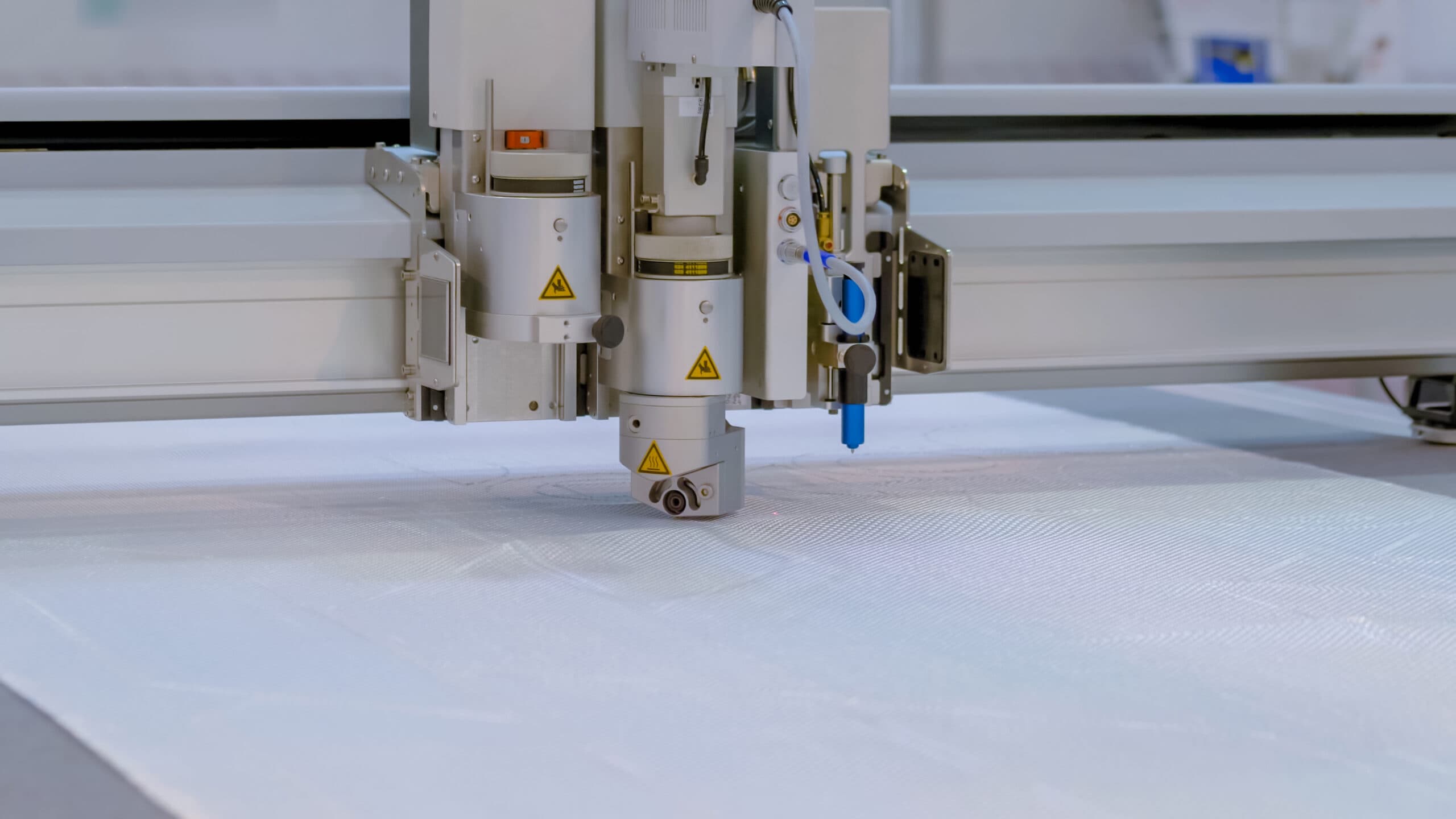
Foam gaskets seal enclosures, doors and panels against water, dust, light and draughts at a very low closing force, and cushion parts against vibration and knocks. We cut polyethylene, PVC, neoprene and Plastazote® foams to your drawing.
- Foam thicknesses we cut, by foam
- 1 to 50 mm
- Typical working compression of a closed-cell foam gasket
- 25% to 50%
Cell structure
Open cell or closed cell foam gaskets?
Every foam is a solid full of gas bubbles, and the first question for a gasket is whether those bubbles, or cells, are open or closed. In an open-cell foam the cell walls are broken, so air and water pass through it as they do through a sponge. It is soft, breathes and absorbs sound, but it only stops water when it is squeezed very hard. In a closed-cell foam each cell is a sealed bubble: water, dust and air cannot pass through, it does not soak up liquid, and it seals at a light compression.
For almost every seal, closed cell is the answer; open-cell foams suit filters, acoustic pads and cushioning. The word sponge is used loosely for rubber foams such as neoprene and silicone sponge, usually supplied closed cell for sealing; check the data sheet.
Foam is not a pressure gasket: it suits covers and doors, not bolted flanges. Where a joint needs more strength or heat resistance, a solid rubber gasket is the next step.
Foam and other materials comparedProperties
Foam gasket materials: typical properties.
These are typical values for common gasket grades of each foam, for comparing materials at the design stage. Every foam is made in several densities and blends, and the data sheet for the grade we supply applies to your part.
Density is the quickest guide: a light foam closes at a very low force; a denser one is firmer and recovers better, but needs more force to compress.
Foam gaskets cut to your drawingGasket foams: typical properties
General values, not a specification
| Foam | Typical service temperature | Cell type and typical density |
|---|---|---|
| Polyolefin foams | ||
| Polyethylene foam | About -40°C to +80°C | Closed cell; about 25 to 200 kg/m³ |
| Plastazote® cross-linked polyethylene | About -60°C to +80°C; some grades higher | Closed cell, nitrogen expanded; about 15 to 115 kg/m³ |
| Vinyl and rubber foams | ||
| PVC foam (flexible) | About -20°C to +70°C | Closed cell; about 60 to 160 kg/m³ |
| Neoprene foam | About -40°C to +80°C, by blend | Closed cell; about 100 to 250 kg/m³ |
| Silicone sponge | About -60°C to +200°C | Closed cell; about 250 to 500 kg/m³ |
| Urethane foams | ||
| Poron® microcellular urethane | About -40°C to +90°C | Fine microcellular; about 240 to 480 kg/m³ |
Polyolefin foams
- Polyethylene foam
- About -40°C to +80°C
- Cell type and typical density: Closed cell; about 25 to 200 kg/m³
- Plastazote® cross-linked polyethylene
- About -60°C to +80°C; some grades higher
- Cell type and typical density: Closed cell, nitrogen expanded; about 15 to 115 kg/m³
Vinyl and rubber foams
- PVC foam (flexible)
- About -20°C to +70°C
- Cell type and typical density: Closed cell; about 60 to 160 kg/m³
- Neoprene foam
- About -40°C to +80°C, by blend
- Cell type and typical density: Closed cell; about 100 to 250 kg/m³
- Silicone sponge
- About -60°C to +200°C
- Cell type and typical density: Closed cell; about 250 to 500 kg/m³
Urethane foams
- Poron® microcellular urethane
- About -40°C to +90°C
- Cell type and typical density: Fine microcellular; about 240 to 480 kg/m³
Typical published values for common gasket grades. Ask for the data sheet of the grade we supply.
What we cut
Foam gaskets and pads we cut.
These are the foams we cut and the thicknesses they are listed in. Tell us what the gasket must keep out, how hard it will be squeezed, the temperature and the quantity, and we will confirm the foam, the density and the cutting method.
Neoprene foam is covered alongside solid neoprene in our neoprene gasket guide, and silicone sponge alongside solid silicone on our silicone gaskets page. Thick foam can be water jet cut with a clean, square edge and no heat. As well as gaskets, we make custom-engineered foam packaging for orthopaedic implants, described on our bioscience and medical sector page.
Plastazote® is a trademark of Zotefoams. Poron® is a trademark of Rogers Corporation. Other names are the trademarks of their owners.
Cut to your drawing
Gaskets, seals, pads, strips and packaging inserts.
Foam advice
We match the foam and its density to the seal and the closing force.
Foams from PSG
Materials and thicknesses
| Material | Available thicknesses |
|---|---|
| Polyethylene foam | 1.500 to 50.000 mm |
| Plastazote® cross-linked polyethylene foam | 1.300 to 3.000 mm for gaskets; 3.000 to 50.000 mm for other parts |
| PVC foam | 2.000 to 20.000 mm |
| Neoprene foam | 1.000 to 5.000 mm |
| Silicone sponge | On request |
| Poron® microcellular urethane | On request |
| Self-adhesive backing | On request |
| Parts | Gaskets, seals, pads, strips and packaging inserts |
- Polyethylene foam
- 1.500 to 50.000 mm
- Plastazote® cross-linked polyethylene foam
- 1.300 to 3.000 mm for gaskets; 3.000 to 50.000 mm for other parts
- PVC foam
- 2.000 to 20.000 mm
- Neoprene foam
- 1.000 to 5.000 mm
- Silicone sponge
- On request
- Poron® microcellular urethane
- On request
- Self-adhesive backing
- On request
- Parts
- Gaskets, seals, pads, strips and packaging inserts
Other foams and thicknesses on request.
Selection
Gasket foams compared by duty.
Each foam trades sealing, heat resistance, recovery and cost differently. Choose what your gasket needs to see which foams qualify.
What does the gasket need?
Choose properties to find the right material. 6 materials compared.
| Requirement | Polyethylene foam | Plastazote® | PVC foam | Neoprene foam | Silicone sponge | Poron® |
|---|---|---|---|---|---|---|
| Closed cell: seals water and dustPoron® seals well when compressed; check the grade for water sealing. | Yes | Yes | Yes | Yes | Yes | No |
| Low compression set over yearsPolyethylene foams take a set under constant load. | No | No | No | No | Yes | Yes |
| Heat above 100°C | No | No | No | No | Yes | No |
| Outdoor weather and ozoneChoose UV-stabilised grades of other foams outdoors. | No | No | No | Yes | Yes | No |
| Oil and grease splashCheck the grade against the fluid. | No | No | Yes | Yes | No | Yes |
| Vibration and impact absorption | No | No | No | Yes | Yes | Yes |
| Cushioning and packaging inserts | Yes | Yes | No | No | No | No |
| Skin-contact and medical gradesCheck the declaration for the exact grade. | No | Yes | No | No | Yes | No |
General guidance; properties vary with density, blend and manufacturer. We confirm the foams available for your part with the quotation.

Design
Compression set, recovery and Poron® microcellular urethane.
A foam gasket seals by being squeezed, and the right squeeze is a balance. Too little and gaps open as the lid flexes; too much and the cells are crushed and the closing force climbs. Most closed-cell foam gaskets are designed to run at about 25% to 50% of their free thickness, and the joint should have a stop, a groove or a fixed gap that holds them there.
Compression set is the part of that squeeze the foam never gets back. It is measured by holding a sample compressed, often by 50% for 22 hours at a set temperature, and recording the thickness lost. A foam with a high compression set seals well when new but slowly takes the shape of the joint and, months later, lets water in; heat speeds this up. Polyethylene foams set more than rubber foams, so they suit cushioning better than doors opened for years.
Poron® microcellular urethane is made for exactly this problem. Its fine, uniform cells give a very low compression set, so a thin gasket keeps pushing back for years; it also absorbs shock, is low outgassing and contains no plasticisers. Ask us whether we can supply the grade you need.
Design the joint to hold the foam at 25% to 50% compression, and no more.Talk to our technical team
Self-adhesive
Self-adhesive and kiss-cut foam parts.
A pressure-sensitive adhesive backing turns a foam gasket into a peel-and-stick part: no fasteners, no glue and quicker assembly.
Adhesive laminated before cutting
The adhesive is laminated to the foam on a release liner and the gasket is cut through both, so every part carries adhesive right to its edge.
Kiss cut on a liner
Kiss cutting cuts through the foam and adhesive but not the liner, so parts stay on a sheet or roll and peel off ready to place.
An adhesive for the duty
Acrylic adhesives resist heat, sunlight and ageing; rubber-based adhesives grab low-energy plastics quickly but soften with heat. Silicone sponge needs a silicone adhesive.
A clean surface
Apply to a clean, dry, grease-free surface at room temperature and press firmly along the whole length; the bond builds over a day or two.
Applications
Where foam gaskets are used.
Foam earns its place wherever a seal must close at a light force, keep out water, dust or light, or cushion a part.
- Industrial
Industrial
Electrical and control enclosures
Lid and door seals that keep water and dust out of cabinets, junction boxes and control panels.
- Security & Defence
Defence
Vehicles and equipment
Seals, pads and anti-rattle strips for vehicle equipment, cases and housings.
- Bioscience & Medical
Medical
Medical devices and packaging
Cushioning pads, device seals and custom foam packaging inserts.
- Automotive
Automotive
Vehicle interiors and lamps
Lamp housing seals, anti-squeak pads and trim gaskets.
Electronics
Electronics and lighting
Display, speaker and luminaire gaskets, and cushioning for components.
Building services
Ventilation and ducting
Duct, damper and panel seals that stop draughts, light and noise.
Foam gasket FAQs
Foam gasket questions, answered.
Can't find what you need? Our technical team is happy to help.
Open cell or closed cell foam for a gasket?
Closed cell, for almost every seal. Its sealed bubbles stop water, dust and air passing through, and it does not soak up liquid, so it seals at a light compression. Open-cell foam breathes like a sponge and only seals when squeezed very hard, so it is better suited to filters, acoustic pads and cushioning.
What is Plastazote®?
Plastazote® is a range of closed-cell, cross-linked polyethylene foams made by Zotefoams. They are expanded with pure nitrogen rather than chemical blowing agents, which gives a clean, odourless and uniform foam that is light, waterproof and chemically resistant. Grades run from very soft to firm, and some are made for medical uses: check the grade's declaration before you specify one.
Which foam makes a waterproof seal?
Any closed-cell foam can, provided it is compressed enough and evenly along its length. Neoprene foam and silicone sponge are the usual choices outdoors because they resist weather and ozone, and silicone covers the widest temperature range. Polyethylene and PVC foams seal well indoors at lower cost. An IP rating belongs to the tested enclosure, not the foam.
Can foam gaskets be self-adhesive?
Yes. Foam can be laminated with a pressure-sensitive adhesive on a release liner before it is cut, so each gasket peels off and sticks in place without fasteners. The adhesive is chosen for the surface and the temperature: acrylic for heat and ageing, rubber-based for a fast grab on plastics, silicone for silicone sponge. Tell us what the gasket will stick to.
What thickness of foam gasket do I need?
Start from the gap. A closed-cell foam gasket usually works best compressed by 25% to 50%, so its free thickness should be about 1.3 to 2 times the gap it fills when the joint is closed. Allow more where the faces are uneven or flex, and check that the closing force is acceptable at full squeeze. We cut foams from 1 to 50 mm thick.
What is Poron® foam?
Poron® is a family of microcellular polyurethane foams made by Rogers Corporation. Its very fine, uniform cells give a much lower compression set than most foams, so thin gaskets keep sealing for years, and it absorbs shock and vibration well. It is widely used for gaskets and pads in electronics, vehicles and lighting. Ask us whether we can supply the grade your drawing names.
Send us your foam gasket drawing.
Tell us what the seal must keep out, the gap, the temperature and the quantity, and our technical team will recommend a foam and quote for the cut parts.
Gasket and shim materials
More materials and methods
Viton™ is a trademark of The Chemours Company. Klingersil® is a trademark of Klinger. Other names are the trademarks of their owners.
- Read more
Gasket and sealing materials
Rubber gaskets
Every common elastomer compared, plus insertion, natural and butyl rubber.
- Read more
Gasket and sealing materials
Neoprene gaskets
Solid neoprene, neoprene foam and neoprene-bonded cork.
- Read more
Gasket and sealing materials
Nitrile gaskets
The standard rubber for oil, fuel and hydraulic fluid.
- Read more
Gasket and sealing materials
EPDM gaskets
Weather, water and steam resistant rubber seals.
- Read more
Gasket and sealing materials
Viton™ (FKM) gaskets
Fluoroelastomer seals for fuels, chemicals and heat.
- Read more
Gasket and sealing materials
Silicone gaskets
Solid, sponge and food-grade silicone for heat and cold.
- Read more
Gasket and sealing materials
PTFE gaskets
Chemically inert gaskets, washers and shims.
- Read more
Gasket and sealing materials
Cork gaskets
Nitrile and neoprene bonded cork for covers and housings.
- Read more
Gasket and sealing materials
Gasket paper and fibre
Compressed fibre, Klingersil® and fibre jointing.
- Read more
Electrical insulation and thermal
Electrical insulation materials
Papers, films and sheet cut into insulators.
- Read more
Plastics and components
Engineering plastics
Nylon, acetal, polycarbonate and PVC parts to drawing.
- Read more
Cutting methods
Die cutting
Flatbed and rotary die cutting, prototype to volume.
Our customers